Why track your rank inside ChatGPT
A growing share of buyer journeys now start inside ChatGPT rather than a search results page. When someone asks for the best tool in a category, ChatGPT does not return ten blue links. It gives one synthesized answer and names a small handful of brands. If your brand is missing, you have lost the discovery moment, and traditional analytics will never show you it happened.
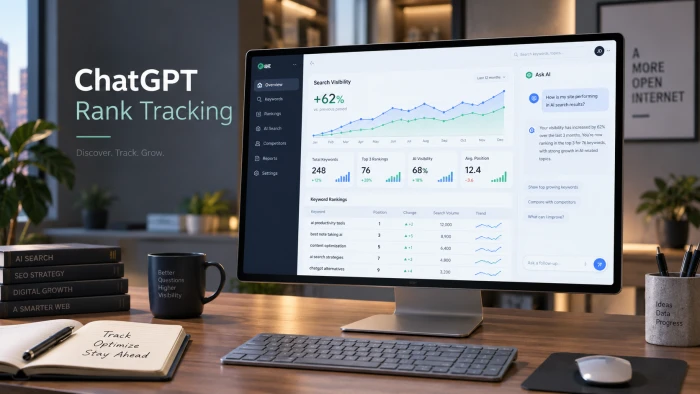
ChatGPT rank tracking tools fix that blind spot. Instead of tracking keyword positions, they run your target prompts on a schedule and record whether ChatGPT mentions you, which source URLs it cites, how you compare to competitors, and how the tone around your brand shifts over time. Below are eight of the most established options, chosen to cover different budgets and use cases.
How ChatGPT rank tracking works
These tools do not read ChatGPT's mind. They send a set of representative prompts to the AI engines on a schedule, capture the answers, and analyze what those answers say about your brand. Because of that, your results are only as good as the prompts you pick, which is why every tool starts by asking you to define the questions your buyers actually ask.
Whatever the dashboard looks like, four measures do most of the work:
● Mentions: whether the engine names your brand at all, and how often.
● Citations: which source URLs the engine links or leans on to build its answer.
● Share of voice: how often you appear compared with named competitors for the same prompts.
● Sentiment: whether the tone around your brand reads as positive, neutral, or negative.
Two things separate the tools more than their charts do. The first is refresh rate, since some check daily and others only weekly, and AI answers can change between sweeps. The second is data source: a few platforms draw on real user prompt data to reflect how people actually search, while most run the simulated prompt set you give them.
What to look for before you choose
Before comparing brands, it helps to know which features actually change the outcome. Run any shortlist past this checklist:
● Engine coverage: confirm the engines your buyers use are included rather than paid add-ons, whether that is ChatGPT, Google AI Overviews and AI Mode, Perplexity, Gemini, Copilot, or Claude.
● Refresh rate: daily tracking catches shifts that weekly tracking misses.
● Citations, not just mentions: the best tools record which URLs are cited and count unlinked brand mentions too.
● Pricing model: prompt-based, per-platform, and flat add-on pricing each suit different needs, so estimate your prompt count and number of brands first.
● Seats and reporting: unlimited seats and white-label reports matter for agencies juggling several clients.
● Monitoring or action: decide whether you want a dashboard that reports, or a system that also suggests what to fix.
There is no single best tool, only the best fit. The right choice depends on your budget and on whether AI visibility is your main focus or one part of a broader SEO program. With that in mind, here are eight of the strongest options available today.
1. Profound
The enterprise-grade, premium option
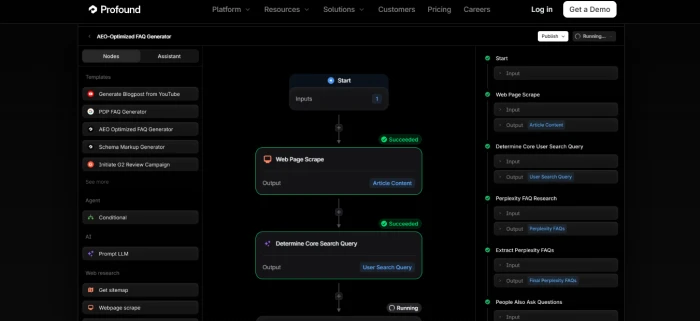
Profound (tryprofound.com).
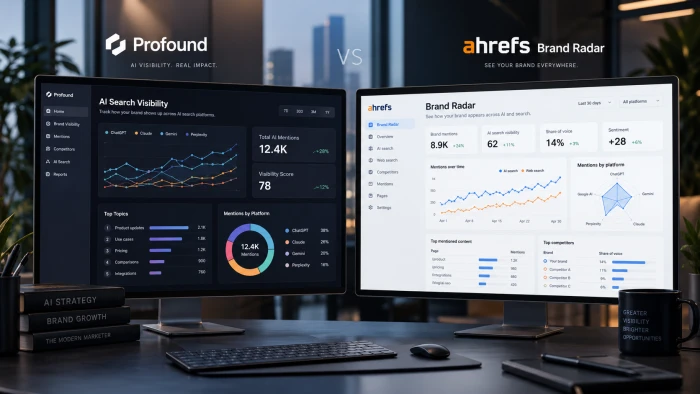
Profound is the most heavily funded name in AI visibility, having raised more than 150 million dollars including a Series C in 2026, and it is used by large brands. It tracks brand citations across ChatGPT, Perplexity, Google AI Overviews, and other engines using real user conversation data rather than only simulated prompts. Its Agent Analytics feature connects to your CDN and reads server logs to show which AI crawlers visit which pages, which almost no rival offers.
Pricing. From $99 a month (ChatGPT only, 50 prompts). Growth is near $399, and Enterprise is custom.
Advantages
● Real conversation data plus deep competitive benchmarking
● Crawler analytics read from your own server logs
● Built to scale for agencies and enterprises
Drawbacks
● The most expensive option, with pricing that is not fully public
● Cost per prompt is higher than average
● Full multi-engine coverage sits behind enterprise pricing
2. Otterly.AI
The budget-friendly starting point
Otterly.AI (otterly.ai).
Otterly.AI is the easiest tool here to set up. It launched in 2024, is based in Vienna, crossed 10,000 users in its first year, and earned a place on Gartner's 2025 Cool Vendors list. It runs your prompts daily across ChatGPT, Google AI Overviews, Perplexity, and Copilot, then logs mentions, cited URLs, sentiment, and competitors. It also tracks which URLs are actually cited, so if ChatGPT names you but links a competitor's article, that shows up.
Pricing. $29 a month for Lite (15 prompts). Standard is $189, and Premium is $489.
Advantages
● Lowest entry price in the market with a gentle learning curve
● Unlimited team members on every plan, even the cheapest
● Daily refresh plus a GEO audit of your crawlability
Drawbacks
● 15 prompts on Lite is enough for testing, not serious monitoring
● Gemini, Claude, and Google AI Mode cost extra
● Prompt-based pricing climbs as your program grows
3. Peec AI
The popular mid-market pick
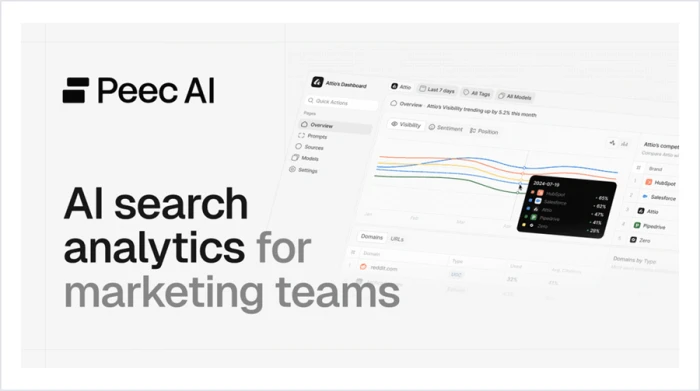
Peec AI (peec.ai).
Peec AI sits between cheap and enterprise, and it is one of the most talked-about tools in the category. The Berlin startup has raised 29 million dollars, crossed 10 million dollars in recurring revenue, and serves more than 2,500 teams including Hugo Boss and TUI. It runs your prompts daily and pairs a net-sentiment score with visibility and competitor data on one screen. Its citation-source reports reveal which third-party sites the engines trusted when forming an answer about your category.
Pricing. From $95 a month for Starter. Pro is $245, and Advanced is $495.
Advantages
● Clean, fast dashboard with sentiment tracking built in
● Citation-source reports show which domains influence answers
● Unlimited seats on every plan, plus a native MCP server
Drawbacks
● Report-only by design, so it does not fix what it finds
● Self-serve plans cap you at three AI models
● Prompt limits mean costs scale with your prompt set
4. Semrush AI Toolkit
The best value if you already use Semrush
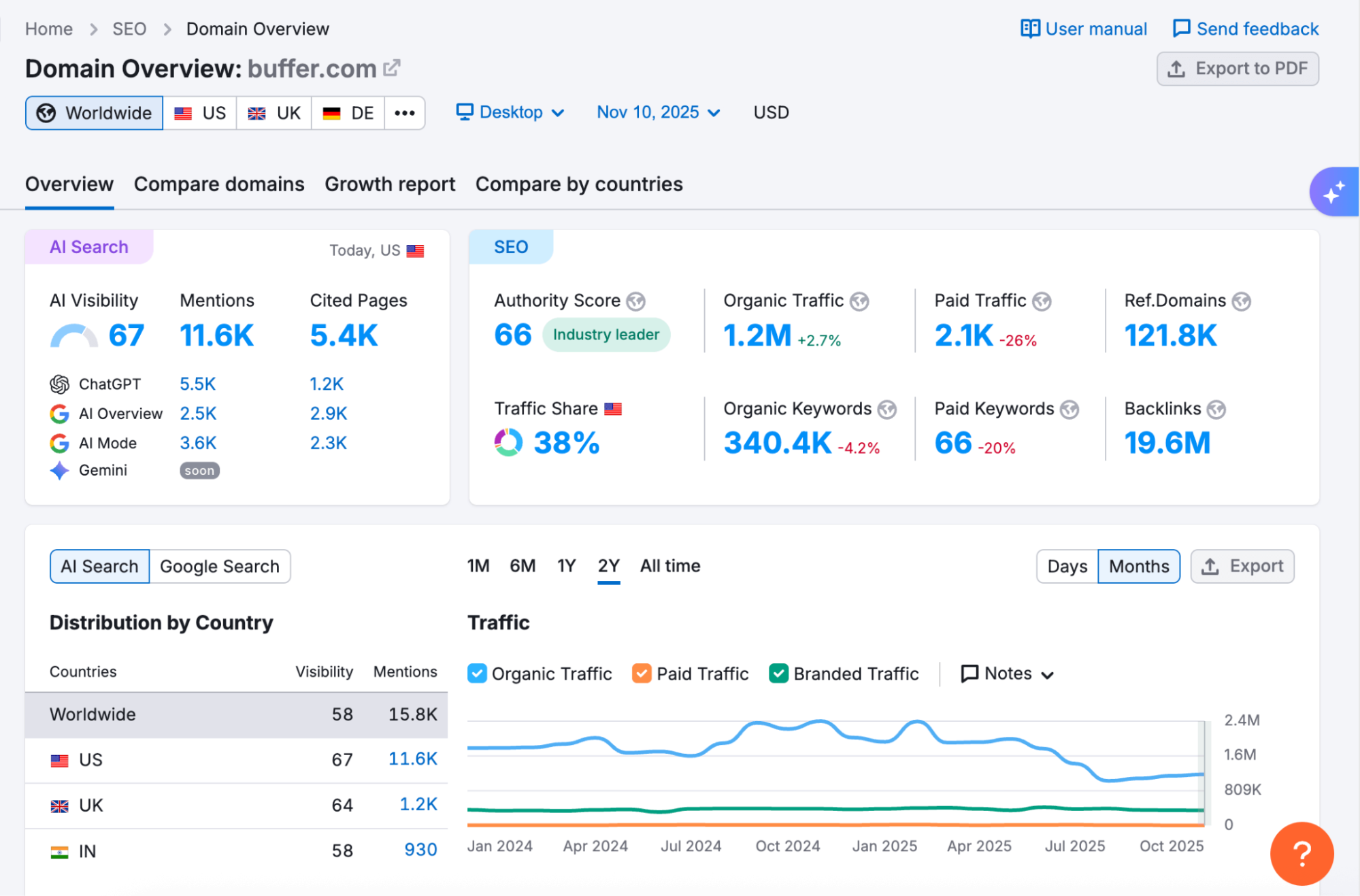
Semrush AI Toolkit (semrush.com).
If your team already lives inside Semrush, this is the lowest-cost way to add AI tracking. The AI Visibility Toolkit is an add-on rather than a standalone product, so you see AI answer data next to the keyword, backlink, and ranking data you already use. It tracks ChatGPT, Google AI, Gemini, and Perplexity, lets you write freeform prompts with no guardrails, monitors up to 500 prompts, and reports share of voice, sentiment, and perception drivers in stakeholder-ready dashboards.
Pricing. $99 a month as an add-on on a Semrush plan, or bundled in Semrush One from $199 to $549.
Advantages
● Cheapest marginal cost if you already pay for Semrush
● AI data sits inside your existing SEO dashboards
● Open-ended prompt builder that agencies tend to prefer
Drawbacks
● Only makes sense if you use or plan to use Semrush
● AI is an add-on, so it goes less deep than dedicated tools
● Fewer engines than some rivals, and no Claude coverage
5. Ahrefs Brand Radar
The data-heavy premium pick
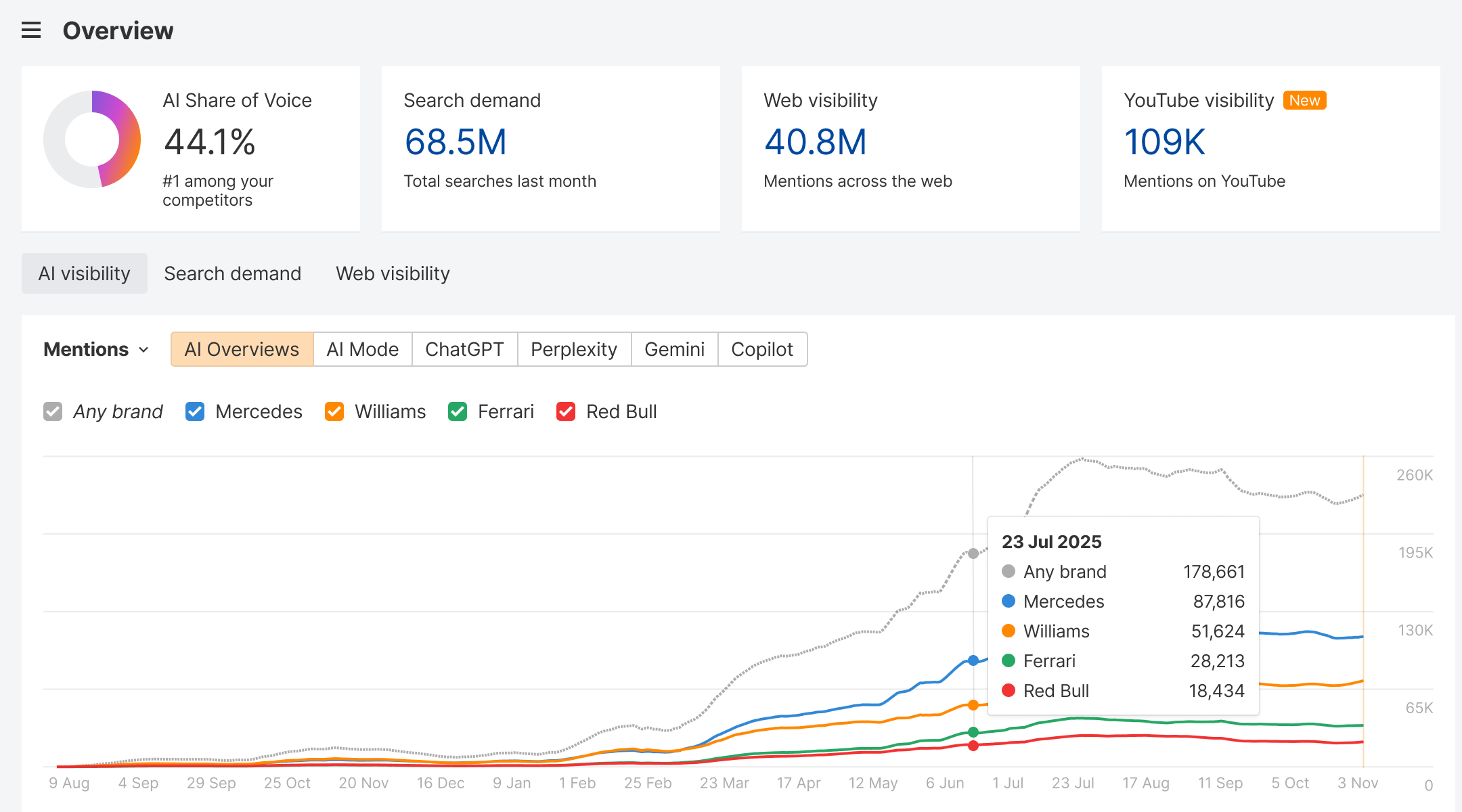
Ahrefs Brand Radar (ahrefs.com).
Brand Radar is the premium tracker from an established SEO suite. Its differentiator is methodology: rather than only running prompts you invent, it draws on a very large corpus of real prompts, which makes results feel more grounded, and it offers historical visibility data that mid-tier tools cannot match yet. Coverage is broad and, unlike Semrush, includes Claude and Meta AI. The catch is cost, since Brand Radar is not standalone and stacks a base subscription with per-platform fees.
Pricing. From about $828 a month all-in ($129 base plus $199 per engine, or a $699 bundle).
Advantages
● Large real-prompt corpus and historical visibility data
● Broad engine coverage including Claude and Meta AI
● Robust filtering and depth for enterprise teams
Drawbacks
● By far the most expensive setup here
● Per-domain pricing makes agency use costly
● Requires a paid Ahrefs base subscription first
6. SE Ranking (SE Visible)
AI visibility inside a full SEO suite
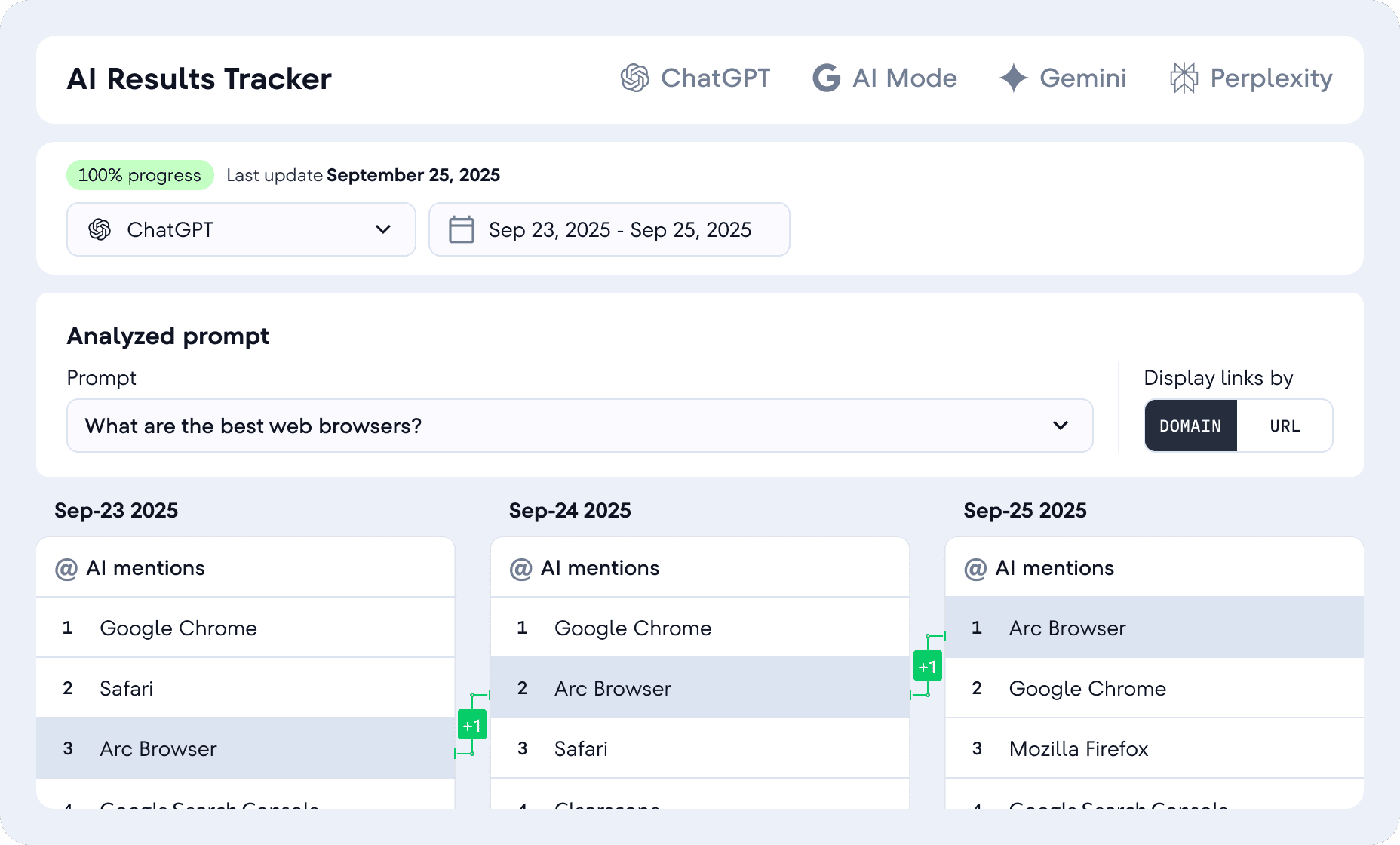
SE Ranking and SE Visible (seranking.com).
SE Ranking is an established SEO platform whose AI side comes in two forms: an AI Search add-on inside the main suite, and SE Visible, a dedicated AI visibility product. It tracks ChatGPT, ChatGPT Search, Perplexity, Google AI Overviews, Google AI Mode, and Gemini, and it logs both clickable citations and unlinked brand mentions, since engines name brands far more often than they link them. A useful detail: it pinpoints which exact URLs on your site are powering AI answers, and which competitor pages earn the citations you want. White-label reporting and unlimited seats make it practical for agencies.
Pricing. From $89 a month as an add-on for SE Ranking users. SE Visible standalone runs from about $99 to $189.
Advantages
● Logs both linked citations and unlinked mentions
● Pinpoints which URLs power AI answers, yours and rivals
● White-label reporting and unlimited seats suit agencies
Drawbacks
● Data refreshes weekly, slow for fast-moving answers
● No Claude or Copilot coverage yet
● Real cost depends on prompt volume and add-ons
7. Scrunch AI
Built for enterprise and compliance
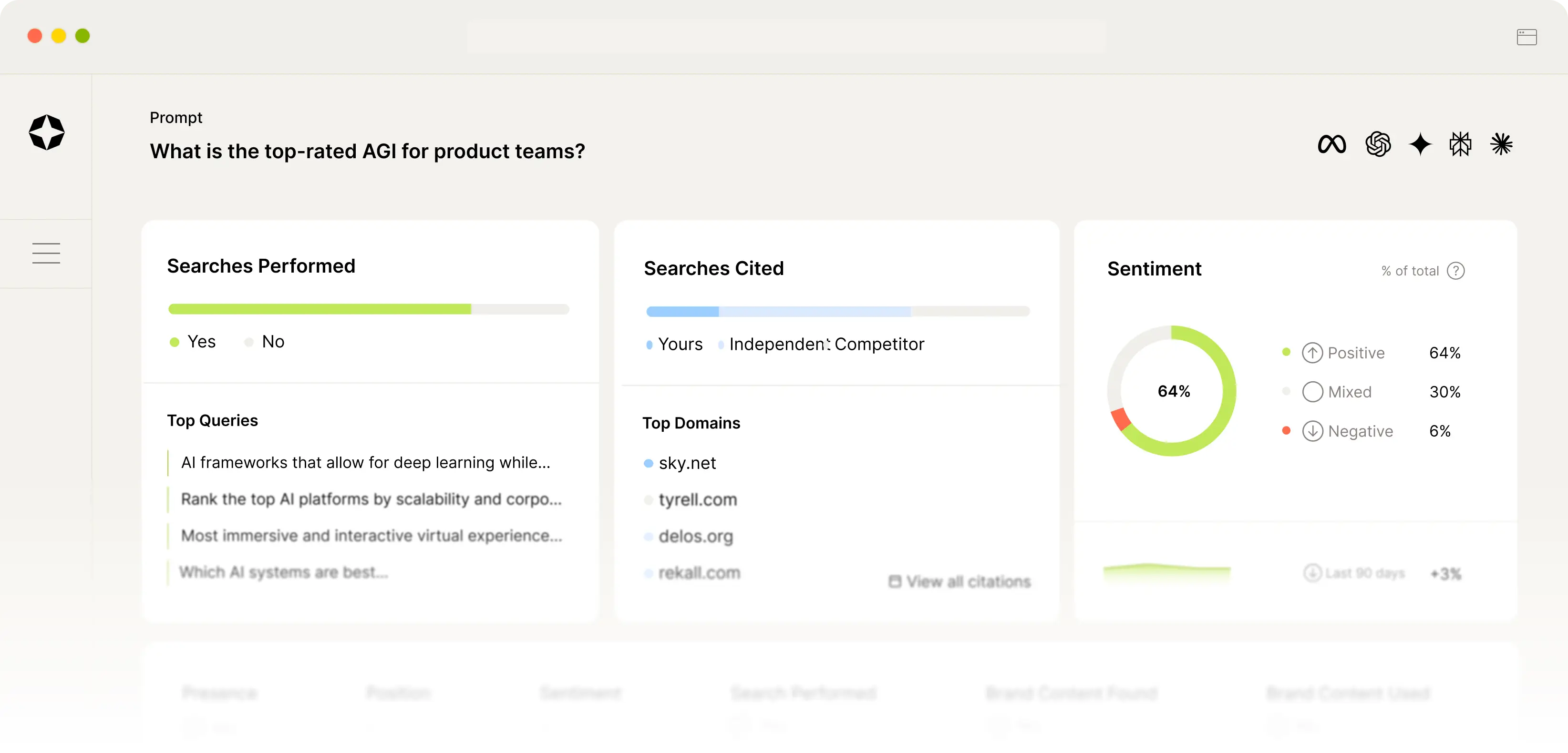
Scrunch AI, now part of Sitecore.
Scrunch AI is an enterprise-focused platform that tracks how brands appear across ChatGPT, Claude, Perplexity, Gemini, and other engines, with competitive benchmarking, content-gap analysis, misinformation detection, and journey mapping. It connects natively to Cloudflare and Vercel to show which AI crawlers reach your pages, and it offers enterprise controls like SOC 2 and single sign-on. Scrunch was acquired by Sitecore in 2026 and continues to operate as part of that suite.
Pricing. From about $250 a month (Core or Starter). Pricing scales with prompts, seats, and audits.
Advantages
● Broad model coverage with misinformation detection
● Crawler attribution through Cloudflare and Vercel
● Enterprise controls like SOC 2 and single sign-on
Drawbacks
● Entry price is steep for small teams
● Data updates weekly rather than daily
● Light on tools to act on what it finds
8. Nightwatch
Traditional rank tracking that added AI
Nightwatch (nightwatch.io).
Nightwatch is an established rank-tracking platform that now monitors AI answers alongside classic search. It tracks keyword rankings across Google, Bing, YouTube, and DuckDuckGo, and layers on visibility inside AI summaries from ChatGPT, Gemini, Perplexity, Claude, and Google AI Overviews, all in one dashboard. Its appeal is correlation: you can view blue-link positions next to AI citations for the same terms. The trade-off is that AI is the newer and smaller half of the product.
Pricing. Keyword-based plans. AI tracking is included, but entry tiers carry only about 50 AI prompts.
Advantages
● One dashboard for classic rankings and AI answer visibility
● Correlate blue-link positions with AI citations
● Mature tracking across Google, Bing, YouTube, and DuckDuckGo
Drawbacks
● AI tracking is the smaller, newer half of the product
● Entry tiers include only a small number of AI prompts
● Less GEO-specific depth than dedicated tools
Two differences that matter more than any feature
Dedicated tools versus SEO-suite add-ons. Profound, Otterly.AI, Peec AI, and Scrunch AI are purpose-built for AI visibility, so they go deeper on citation-level evidence and engine-specific behavior. Semrush, Ahrefs, SE Ranking, and Nightwatch are add-ons to existing SEO platforms, so their strength is showing AI data next to your keyword and backlink data. If AI visibility is your main focus, a dedicated tool usually goes deeper. If it is one part of a broader SEO program, an add-on avoids a new vendor.
Monitoring versus fixing. Most tools here, especially Otterly.AI, Peec AI, and SE Ranking, are monitoring-first: they show clearly where you stand but leave the improvement work to you. Profound and Scrunch push further toward content, workflow, and gap analysis meant to help you act, which is part of why they cost more. Decide whether you want a dashboard or a system that also suggests actions, and the list narrows fast.
How they charge. Otterly.AI, Peec AI, Profound, and Scrunch charge mostly by prompt volume. Semrush and SE Ranking charge a flat add-on on top of an SEO plan. Ahrefs charges per AI platform and per domain. Nightwatch charges mainly by tracked keywords, with AI prompts limited on lower tiers. Your prompt count and the number of brands you track decide which model is cheapest for you, so estimate both before you commit.
Quick comparison
Starting prices verified mid-2026 and subject to change. Confirm on each vendor's site before buying.
| Tool | Starting price | Best for | Main trade-off |
|---|---|---|---|
| Profound | ~$99/mo | Enterprises wanting depth and bot analytics | Costly, opaque pricing |
| Otterly.AI | $29/mo | Small teams and first-timers | Low prompt limits, add-on engines |
| Peec AI | ~$95/mo | Mid-market teams and agencies | Monitoring only, three-model cap |
| Semrush AI Toolkit | $99/mo add-on | Existing Semrush users | Needs a Semrush plan |
| Ahrefs Brand Radar | ~$828/mo | Enterprise content and research teams | Expensive, per-domain pricing |
| SE Ranking | from $89/mo | Agencies inside an SEO suite | Weekly refresh, no Claude |
| Scrunch AI | ~$250/mo | Enterprise and compliance needs | Steep entry, weekly updates |
| Nightwatch | keyword-based | Blending classic SEO with AI tracking | Few AI prompts on entry tiers |
How to choose
Start with your budget and your goal. If you are testing the waters, Otterly.AI at 29 dollars a month gets you real data fast. If you want a clean, well-regarded mid-market tool, Peec AI is a strong pick. If you already pay for an SEO suite, add the Semrush toolkit or, for agencies who value white-label reporting, SE Ranking, before buying anything new. Nightwatch fits teams that want classic rankings and AI in one view. Reserve Profound, Scrunch AI, and Ahrefs Brand Radar for larger teams that need enterprise depth, compliance, or a large historical prompt corpus and have the budget to match.
One honest caveat across every tool here. Independent testing has not yet found a consistent link between AI brand mentions and actual click traffic. Treat these numbers as a benchmark to improve over time rather than a direct revenue meter.