
Our picks at a glance
If you only have two minutes, this table is the guide. Each pick is explained in full further down, with pricing, limits, and four verified G2 reviews per tool.
| Tool | Pick it when | Entry price | G2 rating | One-line verdict |
|---|---|---|---|---|
| Scrunch AI | You want daily positions tied to AI crawler and referral data | $250 per month, billed annually | 4.6 from 73 reviews | Deepest technical layer, but prompts are counted per engine |
| AthenaHQ | You need the tracker to tell you what to fix | Free tier, then $295 per month | 4.9 from 48 reviews | Best action layer, credit meter needs modelling first |
| SE Ranking AI Search Toolkit | You already run Google rank tracking and want AI positions beside it | $89 add-on or $99 standalone | 4.7 from 1,602 reviews for the suite | Cheapest route for existing SEO teams, with two products to untangle |
| Writesonic | Your team will draft content from the gaps it finds | $79 per month, billed annually | 4.7 from 2,129 reviews, mostly writing | Lowest cost per tracked prompt, three engines only below Enterprise |
| Peec AI | You want clean, exportable rank data and unlimited seats | About 70 euros per month, billed annually | 4.8 from 20 reviews | Best pure tracker for the price, no content tooling |
We limited the field to tools that score position per prompt on a daily schedule, publish their pricing, and had enough verified 2026 reviews to judge how they behave after a few months of use. Tools that only report whether you were mentioned, without ordering, were left out.
What a rank inside an AI answer looks like
Before comparing tools it helps to see the thing they measure. Ask ChatGPT for the best browser for privacy and it might name three browsers in a paragraph, list five with pros and cons, or name none and describe features instead. A rank tracker stores that answer and records four facts about it.
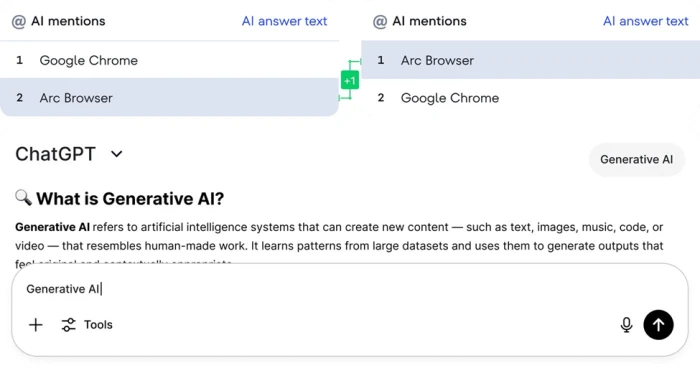
The tracker reads the full ChatGPT response and records that one browser was named first and another second.
The four facts are: was the brand named at all, in what order relative to other brands, was a link to its domain included, and how was it described. Run that across three engines and you get a small table like the one below, which is an illustrative reading of a single day, not a measurement of any real brand.
| Engine | Brands named, in order | Your position | Link to your site | Tone of your mention | Domains cited |
|---|---|---|---|---|---|
| ChatGPT | Competitor A, you, Competitor B | 2 of 3 | No | Positive with a caveat about price | Two review sites and one tech blog |
| Google AI Mode | You, Competitor A | 1 of 2 | Yes | Positive | Your comparison page and a forum thread |
| Perplexity | Competitor A, Competitor B, Competitor C | Not named | No | Not applicable | A roundup article that does not list you |
Read across the row and the job becomes clear. On Google AI Mode your own page did the work. On ChatGPT two review sites shaped the order. On Perplexity a single roundup article decided the whole answer, and you are not in it. The tracker's value is turning that into a daily number and pointing at the roundup.
Run the same three prompts tomorrow and the order may flip, because retrieval pulls a slightly different page set and the model samples differently each time. That is why every tool in this guide runs prompts daily and reports averages, and why a single screenshot from a phone is not a rank.
The pricing math: what 50 prompts really cost
Headline prices in this category are close to meaningless until you know how a tool counts. Some meter prompts, some meter prompts multiplied by engines, and one meters every individual AI response. The table applies one realistic program to all five: 50 prompts, three engines, checked daily for a month.
| Tool | What the entry plan meters | Does 50 prompts on 3 engines fit? | What it costs | Notes |
|---|---|---|---|---|
| Scrunch AI | 125 prompt slots, and each engine you enable consumes a slot per prompt | No. The Core plan fits 41 prompts on three engines, or 50 prompts on two | $250 per month billed annually for Core; full coverage means a custom Enterprise quote | Reviewers found this multiplication only after signing |
| AthenaHQ | 3,600 credits a month, where one credit is one AI response | No at daily cadence. 50 prompts on three models daily is 4,500 responses. Fits 40 prompts daily, or 50 every other day | $295 per month, or $245 billed annually; third-party reviews list extra credits at $100 per 1,250 | The free tier's 300 credits cover a ten-day pilot of ten prompts on three models |
| SE Ranking AI Search Toolkit | SE Visible Basic lists 200 prompts and roughly 12,000 analyzed answers a month; the in-suite add-on sells prompt packages | Yes on the standalone Basic plan, which covers 50 prompts on five engines daily with room to spare | $99 per month billed annually for SE Visible Basic, or $89 per month as an add-on to an existing SE Ranking plan | Confirm whether your engines multiply against the prompt cap; third-party reviewers report caps compounding on the add-on |
| Writesonic | Prompts plus a daily answer quota: 50 prompts and 50 answers a day on Starter | Not on Starter, because three engines need 150 answers a day. Basic, with 100 prompts and 300 daily answers, fits | $199 per month billed annually for Basic; monthly billing adds about 20 percent | Engines are fixed at ChatGPT, Gemini, and Google AI Overviews on every self-serve plan |
| Peec AI | 50 prompts and three models on Starter, run daily | Yes, exactly | About 70 euros per month billed annually; a fourth model is a paid add-on | The cheapest fit for this program, if the three models you need are the three it offers |
Two lessons fall out of the table. First, the cheapest sticker price and the cheapest fit are different tools. Second, the two most expensive entries are the ones with the richest data and action layers, so the extra money is buying something, provided you will use it.
The 5 best LLM rank trackers
Each entry below follows the same shape: what the tool is, where it wins, where it loses, a compact table of four verified G2 reviews collected in September 2026, and a plain statement of who should buy it.
Scrunch AI
Best for daily position tracking with crawler analytics
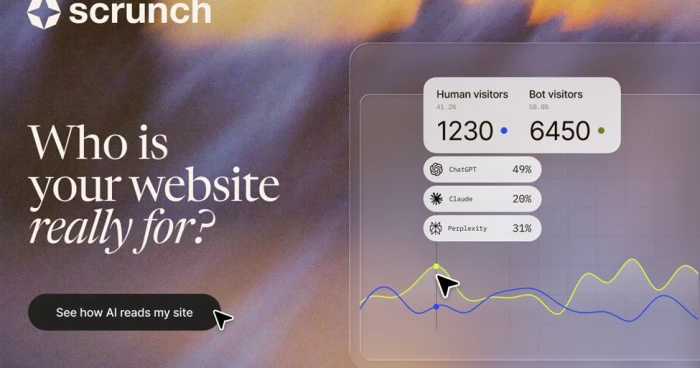
Scrunch pairs prompt tracking with a view of which AI bots visit your site and why. Image: Scrunch AI.
| Best for | Agencies and mid-size brands that want daily prompt results plus AI crawler and referral data in one place |
| Starting price | Core at $250 per month billed annually, with 125 prompts, 3 personas, 5 site audits, and 5 seats; Enterprise is custom |
| Engines at entry | ChatGPT, Perplexity, Google AI Overviews, and Copilot; Claude, Gemini, Meta AI, Google AI Mode, and Grok require Enterprise |
| Free trial | 7 days, no card required |
| Standout feature | Persona-based tracking and GA4 integration that reports AI referral traffic and bot visits |
| G2 rating | 4.6 out of 5 from 73 reviews, September 2026 |
| Website | scrunchai.com/pricing |
What it is
Scrunch AI was founded in 2023 in Salt Lake City, raised a $15 million Series A, and was acquired by Sitecore in 2026. It describes itself as an AI customer experience platform, which in practice means three layers: prompt monitoring, insights on why you rank where you do, and an Agent Experience Platform that serves AI crawlers a machine-readable version of your site.
Where it wins
Prompt tracking is daily and granular. You upload or generate prompts, tag them by topic, persona, and funnel stage, and see for each day and each engine whether you were mentioned, in what position, with what sentiment, and which URLs were cited. The full answer text is stored and available through the API.
The technical layer is where it separates from plain monitors. Agent traffic analytics show which bots crawl which pages and whether the visit was for retrieval, indexing, or training, and the GA4 connection reports the referral sessions AI engines send back. Reviewers rate that combination as the best they evaluated.
Where it loses
Prompt allowances are counted per engine, so 125 prompts across three engines is closer to 40 prompts each. The Core plan covers four engines and the most requested additions live on the custom tier. Reporting is dashboard-first, with exports and PDF generation a recurring complaint.
What real users say
Summarized from verified G2 reviews. Ratings and dates are as published by the reviewers.
| Reviewer, via G2 | Rating and date | What they like | What they dislike |
|---|---|---|---|
| Tehra P., Owner and President, small agency | 4.5, November 2025 | Auto-generated prompts are a good start, daily charts are easy to read, and the agent traffic feature is unique | The 450-prompt agency package counts each engine separately, so three engines leave 150; tracking sometimes skips a day; no report builder |
| Dave D., Head of SEO and GEO, enterprise | 5.0, September 2025 | Most intuitive of several GEO tools tested; cited domains and URLs are easy to surface; results over time show wins and losses | Old prompt tags are hard to remove |
| MJ F., Senior Product Manager, small business | 3.5, April 2026 | Clean dashboard; API returns full answer text with citation URLs; best GA4 AI referral integration he evaluated | Sales terms shifted during negotiation; some models locked behind higher tiers without clear notice |
| Borja C., enterprise | 3.5, April 2026 | Upload your own prompts and see daily results per prompt on every platform | Recommendations are weak, prompt groups confusing, and it sometimes reports no mention when the brand is in the answer |
Buy it if
Buy Scrunch if you want daily position data tied to crawler behavior and referral traffic, and you have someone who can work with an API or a dashboard rather than a PDF. Confirm engine coverage and prompt counting in writing before you sign.
AthenaHQ
Best for turning rank data into a to-do list
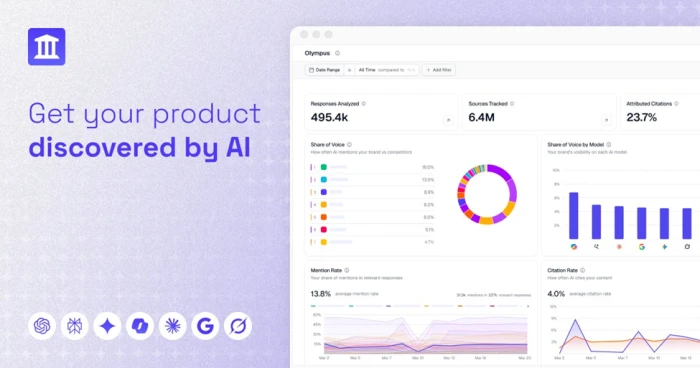
AthenaHQ tracks prompts across up to nine models and routes gaps into an Action Center. Image: AthenaHQ.
| Best for | Teams that want the tracker to prioritize what to fix, and agencies that need client-ready reporting |
| Starting price | Essential is free with 300 credits; Starter is $295 per month, or $245 billed annually, with 3,600 credits; Enterprise is custom |
| Engines at entry | Five models on the free tier including Claude, up to nine on Starter, with no per-engine add-ons |
| Free trial | The free tier is the trial; there is no time-limited trial of paid plans |
| Standout feature | Action Center that converts visibility gaps into assigned tasks, plus Shopify and GA4 attribution |
| G2 rating | 4.9 out of 5 from 48 reviews, September 2026 |
| Website | athenahq.ai/pricing |
What it is
AthenaHQ is a San Francisco company from the Y Combinator Winter 2025 batch. It is SOC 2 Type 2 certified and lists customers such as Coinbase, SoFi, and Twilio. The product is built around a loop: track prompts daily, inspect the answers and citations, then act on ranked recommendations without leaving the platform.
Where it wins
Coverage is bundled rather than sold per engine, which keeps the bill predictable at a given credit level. Claude is available even on the free tier, and Google AI Mode is tracked on Starter, both of which several rivals gate. Regional segmentation lets multi-market brands see how answers differ by metro or country.
The Action Center is the reason most reviewers chose it. It flags knowledge gaps, including hallucinated facts about pricing or services, and tells you which page to create or fix. Shopify and GA4 integrations then tie citations to sessions and revenue, which is the question finance teams ask first.
Where it loses
Everything runs on credits, with one credit per AI response, so enabling many prompts across many engines burns the monthly allowance quickly. Self-serve plans are single region and single language, and the citation engine, SSO, and BI connectors are Enterprise only. The prompt library ships without industry templates.
What real users say
AthenaHQ's G2 base is smaller than the incumbents but recent and detailed.
| Reviewer, via G2 | What they like | What they dislike |
|---|---|---|
| Alex N., Head of Digital Product, mid-market | Shows exactly where to focus GEO effort and which content to publish; the team invests in customer success | So much in the platform that it can feel overwhelming to navigate |
| Verified user, leisure, travel and tourism | Action Center flagged hallucinated pricing that was fixed in two weeks; Shopify and GA4 tie citations to revenue; visibility rose from 12 to 41 percent in four months | Credits burned faster than expected in the first month |
| Verified user, food and beverages agency | Reports that non-technical clients can read; pitch workspace closed three retainers; regional tracking across APAC, EMEA, and North America | Self-serve plans are limited and the recommendation engine is Enterprise only, so clients under $300 a month are hard to serve |
| Tarek E. | Out-of-the-box reports, easy prompt setup, and visibility charts by prompt group help leadership reporting | Some features need more setup; wants more visibility on prompt volume data |
Buy it if
Choose AthenaHQ when your problem is not knowing where you rank but not knowing what to do about it. Model your credit burn on the free tier first, and check that a single region and language cover your market before paying.
SE Ranking AI Search Toolkit
Best for SEO teams adding AI answers to an existing tracker
SE Ranking positions AI answer tracking as one layer of a full SEO suite. Image: SE Ranking.
| Best for | Agencies and in-house SEO teams that already run Google rank tracking and want LLM positions in the same login |
| Starting price | AI Search add-on at $89 per month on top of an SE Ranking plan, or standalone SE Visible from $99 per month with 200 prompts; Core at $189 covers 450 prompts |
| Engines at entry | ChatGPT, Perplexity, Google AI Overviews, Google AI Mode, and Gemini |
| Free trial | Free trial available, no card required |
| Standout feature | Linked versus unlinked mention tracking alongside classic rankings, with API and MCP access to the data |
| G2 rating | 4.7 out of 5 from 1,602 reviews for the SE Ranking platform, September 2026 |
| Website | seranking.com/ai-visibility-tracker |
What it is
SE Ranking is a long-running SEO suite that added an AI Search Toolkit inside the platform and a standalone product called SE Visible. Both track brand mentions, links, and positions inside AI answers, benchmark competitors, and store historical performance so you can compare weeks and months rather than snapshots.
Where it wins
The tracker records whether a mention included a link back to your site, which turns out to matter: a brand can be named often without ever earning a click path. AI Citation Analysis lists the third-party domains each engine relies on for your category, and Competitor AEO Research compares mentions, citations, and links across brands.
Because it lives next to keyword rankings, site audits, and GA4 data, you can ask whether a Google position change preceded an AI citation change. The API and MCP server let analysts pull live AEO data into AI assistants and BI dashboards, which several enterprise reviewers highlight.
Where it loses
Buyers have to untangle two products with different prices, refresh rates, and engine lists, and third-party reviewers describe SE Visible's weekly refresh as slow for the price. Claude, Copilot, Grok, and Meta AI are not covered. Reviewers repeatedly ask for finer segmentation by country, language, and individual engine.
What real users say
SE Ranking's reviews cover the whole suite, so the four below were chosen because they discuss the AI tracking features directly.
| Reviewer, via G2 | What they like | What they dislike |
|---|---|---|
| Sarah F., CEO and Co-founder, small agency | Cross-platform view of the same prompts on ChatGPT, AI Overviews, and AI Mode shows how consistently the brand is surfaced | Wants prompt grouping by audience, industry, and campaign, and deeper comparisons when engines disagree |
| Max G., Brand Manager, enterprise manufacturing | Linked versus unlinked mention tracking is a useful quality signal for a beverage brand portfolio | Wants page and topic context for each link and segmentation by brand, category, market, and engine |
| Daniel A., Director of Sales and Marketing, enterprise | API and MCP pull SEO and GEO data into his own reporting environment and cut manual consolidation | Newer AI visibility reporting feels directional rather than definitive; custom reports take configuration |
| Elena C., E-commerce and Digital Marketing, enterprise retail | Recurring prompts and historical data show whether content updates improved presence | Wants segmentation by country, language, and engine, plus more customizable dashboards |
Buy it if
If your team already lives in SE Ranking, adding the AI layer is the cheapest way on this list to get prompt positions next to Google positions. If you are buying AI tracking alone, decide between the add-on and SE Visible on refresh rate and prompt count before you compare prices.
Writesonic
Best for tracking and fixing in one workflow
Writesonic repositioned from AI writing to an AI search visibility platform with content tools attached. Image: Writesonic.
| Best for | Small content teams that want prompt tracking, competitor gaps, and drafting tools in one subscription |
| Starting price | Starter at $79 per month billed annually with 50 prompts and 50 answers checked daily; Basic at $199 with 100 prompts and 300 daily checks; Growth at $399 with 200 prompts and 600 daily checks; Enterprise is custom |
| Engines at entry | ChatGPT, Gemini, and Google AI Overviews on all self-serve plans; the full set of 10 platforms is Enterprise only |
| Free trial | 7 days, no card required |
| Standout feature | Prompt suggestions drawn from a claimed dataset of 120 million real AI conversations, with estimated AI search volume |
| G2 rating | 4.7 out of 5 from 2,129 reviews, most of which cover the writing tools, September 2026 |
| Website | writesonic.com/pricing |
What it is
Writesonic started in 2020 as an AI writing assistant, added SEO tooling, and in 2026 reorganized the whole product around AI search visibility. The pitch is track, act, and prove: monitor prompts, find pages and third-party sites where competitors appear and you do not, then draft or refresh content from the same dashboard.
Where it wins
Setup is quick. The platform scans your site, proposes prompt groups by category, and starts checking answers daily. The cited pages report shows which of your URLs earn citations, and the competitor view shows which prompts surface rivals instead of you, which several reviewers call the single most useful screen.
Cloudflare-based crawler analytics and the Action Center connect measurement to fixes, and a Claude Code MCP connector shipped in 2026 for teams that work inside AI assistants. Pricing per tracked prompt is among the lowest here.
Where it loses
Self-serve plans track only three engines, so Perplexity, Claude, and Copilot positions require an Enterprise contract. The Action Center is limited to a handful of items below Enterprise, and monitoring-only teams pay for article credits they will not use. A minority of reviewers report bugs and slow support, and the platform has a long history of billing complaints on Trustpilot.
What real users say
Most Writesonic reviews discuss writing. The four below cover the AI visibility tracker specifically, and they include the harshest review in this guide.
| Reviewer, via G2 | Rating and date | What they like | What they dislike |
|---|---|---|---|
| Nikki L., SVP, Head of Earned Media, enterprise | 5.0, March 2026 | Out-of-the-box data views deliver insights without exports; fast customer team; used daily and in new business pitches | Bugs appear now and again |
| Christophe D., SEO Manager, small business | 4.0, April 2026 | Site scan proposes prompts; branded versus non-branded splits, citation sources, and competitor data support client reporting | Action Center capped at five items on a roughly $500 plan; feels pushed toward Enterprise for features that should be included |
| Mohammed Z. | 3.5, July 2026 | Cited pages view shows which blog posts earn citations and what to update first; visibility score gives a number to trend | Still unclear what movement in the score means for traffic |
| Verified user, computer software, small business | 1.0, August 2026 | The content writer itself is good | Could not add prompts after onboarding; bot traffic lags a day; action items vanish; charts fail to populate; slow support. The vendor acknowledged the issues in its reply |
Buy it if
Buy Writesonic if you will use the drafting and refresh tools as much as the tracker, and if ChatGPT, Gemini, and Google AI Overviews are the engines you care about. If Perplexity or Claude positions matter, price the Enterprise tier before you commit.
Peec AI
Best pure tracker for the price
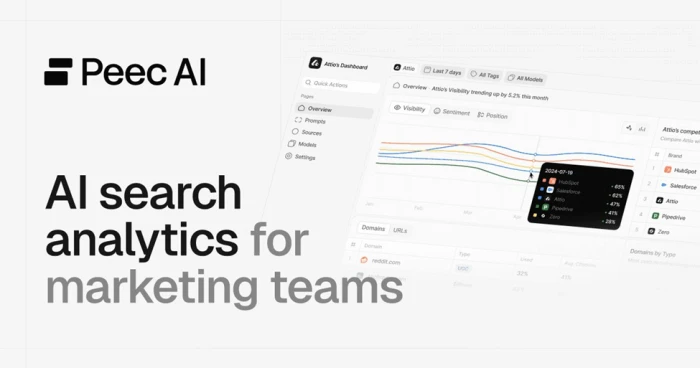
Peec AI's overview plots visibility, position, and sentiment over time against a chosen competitor set. Image: Peec AI.
What it is
Peec AI is a Berlin company that passed $10 million in annual recurring revenue within sixteen months of launch and counts Zalando, Squarespace, and Hugo Boss among more than 3,000 customers. It appeared in our earlier guide to AI visibility tools; it belongs here too because position inside the answer is one of its three core metrics.
Where it wins
Every tracked prompt stores the full answer with each brand scored for visibility, position, and sentiment, and the interface moves from overview to that detail in two clicks. Sources are split into pages the model used and pages it actually cited, which is a distinction most trackers blur.
Unlimited seats on every tier make it cheap to give clients and stakeholders their own logins. An MCP server, REST API, and Looker Studio connector let analysts take the data elsewhere, and reviewers consistently name the MCP as a reason they chose it.
Where it loses
Three models per plan means Gemini, Grok, Copilot, or AI Mode cost extra, and Claude requires Enterprise. The Actions module is new and not yet trusted by reviewers to understand their business. There is no content or audit tooling, and comparing date ranges is fiddly.
What real users say
Peec's reviews are mostly organic. The four below are different reviewers from the ones quoted in our AI visibility tools guide.
| Reviewer, via G2 | What they like | What they dislike |
|---|---|---|
| Xavier W., MarTech and Automation Specialist, mid-market | Simple interface with a complete metric set; best pricing among the platforms compared; flexible project setup | No page-level AEO readiness or optimization feature |
| Juan G., SEO Manager, small business | Visual reporting makes daily LLM tracking easy; sources and citations are simple to pull; MCP works without friction | Comparing date ranges is tricky; shopping tracking was still in beta |
| Matt F., Head of Organic Strategy, small business | Best value tracker on the market; easy to learn and act from; responsive to suggestions | The most useful insights still come from exports and manual filtering |
| Verified user, small business | Easy filtering down to content gaps and the listicles worth appearing in | Onboarding suggested 50 prompts with about 40 percent overlap, requiring manual cleanup |
Buy it if
Choose Peec when accurate, well-presented rank data is the deliverable and you already own the content process. Skip it if you expect the tracker to tell you what to fix.
Capability scorecard
The scorecard answers the questions buyers ask on a demo call. Entries reflect the entry paid plan unless stated otherwise, and where a vendor's public materials were unclear the cell says so rather than guessing.
| Capability | Scrunch AI | AthenaHQ | SE Ranking | Writesonic | Peec AI |
|---|---|---|---|---|---|
| Position within the answer | Yes | Yes | Yes | Yes, plus a visibility score | Yes |
| Sentiment per mention | Yes | Yes | Yes | Growth plan and above | Yes |
| Cited sources per answer | Yes, with cited URLs in the API | Yes, with competitor pages shown | Yes, linked versus unlinked | Yes, cited pages report | Yes, split into used and cited |
| Full answer text stored | Yes | Yes | Yes | Yes | Yes |
| Daily refresh on the entry plan | Yes | Yes, metered by credits | Yes in the suite; weekly on SE Visible per reviewers | Yes | Yes, with weekly and hourly options |
| API access | Enterprise | Paid add-on, price not published | Higher plans | Enterprise | Higher tiers |
| MCP server | In development per reviewers | Not published | Yes | Yes, Claude Code connector | Yes |
| Branded or white-label reports | No, dashboard access only | Yes, branded PDF export | Yes, in the suite | No on standard tiers | Looker Studio on higher tiers |
| AI crawler analytics | Yes, by bot and purpose | Yes, through GA4 | No | Yes, Cloudflare based | No |
| Free tier or no-card trial | 7-day trial, no card | Free tier | Free trial, no card | 7-day trial, no card | 7-day trial, card required |
| Seats on the entry plan | Five | Unlimited on free tier, seat-based on Starter | Unlimited on SE Visible | One | Unlimited |
| Regional segmentation | Partial, via prompt qualifiers and personas | Enterprise; self-serve is single region | Seven countries, five languages | Enterprise | Yes, per country |
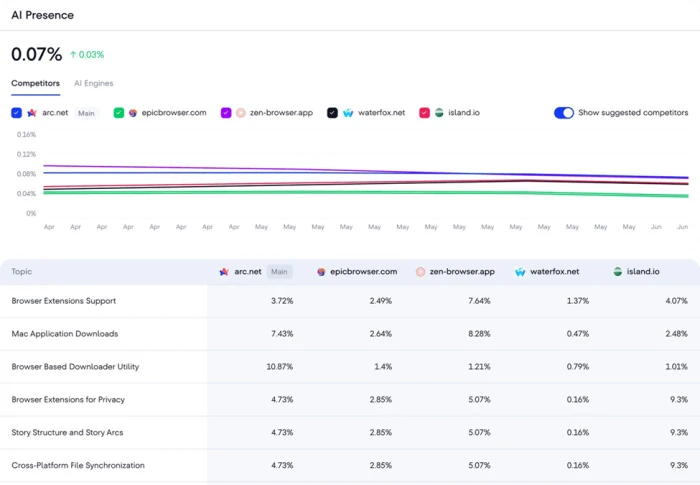
Share of voice by topic is the report every tool on the scorecard can produce; the differences are in refresh rate, sources, and what happens next.
Rank tracker vs mention monitor vs SEO tracker: 12 differences
Three products get called "AI rank tracking" in vendor copy. A classic SEO rank tracker records a URL's position on a results page. An AI mention monitor tells you whether you were named in an answer. An LLM rank tracker adds order, sources, sentiment, and daily sampling. The table separates them on twelve points.
| Aspect | SEO rank tracker | AI mention monitor | LLM rank tracker |
|---|---|---|---|
| What is scored | A URL for a keyword | Whether a brand appears in an answer | A brand's order, link, and tone inside the answer for a prompt |
| Position scale | 1 to 100 on a page | Present or absent | First to last among the brands the answer names |
| Absence | Rare, nearly every page ranks somewhere | Recorded as a zero | Recorded, and explained through the sources cited instead |
| Data collection | Scrapes a results page | Submits a prompt and checks for a brand string | Submits a prompt, stores the full text, parses brands, links, and tone |
| Sampling | One observation per day is enough | Often one run per prompt | Repeated runs, reported as an average or rate |
| Personalization handling | Location and device | Usually ignored | Location, persona, and capture method documented |
| Sources | Not shown | Sometimes a domain list | Cited URLs per answer, split from pages merely used |
| Competitor view | Which domains outrank you | Which brands were also mentioned | Order and share of voice per prompt group over time |
| Sentiment | Not measured | Rarely measured | Scored per mention |
| Pricing lever | Keywords | Prompts | Prompts multiplied by engines, or credits per response |
| Refresh expectation | Daily standard, weekly acceptable | Weekly is common | Daily is the minimum for a trend |
| Primary action it supports | Improve the page and earn links | Know that a gap exists | Fix the specific page or third-party source behind the position |
Eight questions to ask before you sign
Every complaint in the reviews above traces back to a question that was not asked on the demo. Put these eight to the vendor in writing and keep the answers with the contract.
| Question | A good answer | A warning sign |
|---|---|---|
| How do you count prompts across engines? | One prompt covers every engine on the plan | Each engine consumes a prompt slot, or credits are drawn per response, and the pricing page does not say so |
| Where do the answers come from? | A documented capture method and a disclosed number of samples per prompt per day | "Proprietary" with no detail, or a refusal to say whether the consumer interface is used |
| What happens to my history when you update models or your prompt index? | Past data is frozen and versioned | Metrics are recalculated retroactively, which one Ahrefs reviewer described as making progress tracking unreliable |
| Can I export raw answers and citations on this plan? | CSV and API on the plan being quoted | Screenshots only, with the API held back for Enterprise |
| Which engines are included on this exact plan? | A written list attached to the quote | "All major engines" on the website and add-ons on the invoice |
| How is position defined? | A documented ordering rule you can reproduce from the stored answer | A score with no ordering, or an ordering that changes between reports |
| What is the refresh cadence on this plan? | Daily by default, with the option to go faster | Weekly on the plan you can afford, daily on the plan you cannot |
| Can I try it without a sales call? | A free tier or a time-limited trial with no card | A demo, a security review, and several weeks before you can see the product |
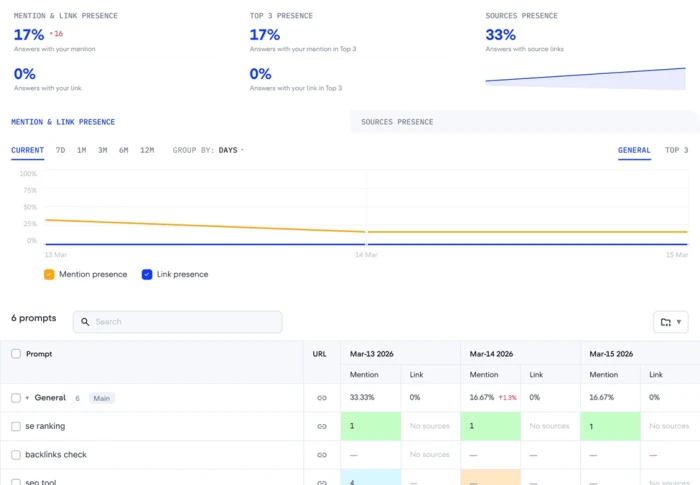
Daily results per prompt, with mention and link recorded on each date, is what a good answer to the refresh question looks like in practice.
Your next step
Do three things this week. Write a one-page sheet that defines what a rank means for your team, because it costs nothing and prevents the most common argument later. Draft 30 prompts in three tiers, category, comparison, and branded, because every tool will ask for them on day one. Then run the pricing math table against those 30 prompts and your three engines, and only then open a trial.
If the math points at Peec or SE Ranking, start the trial today; both give you a baseline inside two weeks without a sales call. If it points at Scrunch or AthenaHQ, use the free tier or trial to model prompt slots and credits before the contract conversation. If it points at Writesonic, confirm that ChatGPT, Gemini, and Google AI Overviews are the engines your buyers use.
Define what a rank means before you buy, multiply prompts by engines before you pick a plan, and run a two-week baseline before you tell anyone a number. Every disappointed review in this guide skipped one of those three.