THE SHORT ANSWER New or optimized content typically starts appearing in AI answers within 2 to 6 weeks. Early signals often show up around week 2, citations become consistent by weeks 5 to 6, and full visibility across multiple AI platforms usually takes 2 to 3 months. The exact clock depends almost entirely on which platform you are watching. |
Every content team optimizing for AI search eventually asks the same question: we published, we restructured, we added the schema, so when does ChatGPT actually start naming us? The honest answer is that there is no single timeline, because the major AI platforms discover and select sources in fundamentally different ways. The good news is that the timelines are now measurable, and they are dramatically shorter than traditional SEO, where ranking improvements commonly take 6 to 12 months.
Why the clock differs: two architectures
AI search systems fall into two broad categories, and each runs on a different clock.
Retrieval-based systems such as Perplexity, Google AI Overviews, Bing Copilot, and ChatGPT with browsing fetch live web content at query time, then synthesize an answer and attach citations. For these systems, the question is simply how fast your page enters their index. Perplexity maintains its own web index with near real-time updates, and its documentation describes processing content updates at very high volume, so a crawlable page on a strong domain can surface within days.
Training-data systems answer from what the model learned before its knowledge cutoff. When ChatGPT or Claude responds without searching the web, your content can only be referenced if it existed, and carried enough authority, when the training corpus was assembled. That is why reputational signals such as review-site presence and inclusion in third-party listicles take far longer to pay off: they need 30 to 90 days or more to work through model ingestion cycles.
Most buyer queries today hit retrieval-based systems, which is good news: the fast path is the common path.
Days until a first citation, by platform
Typical windows measured from publication or optimization of crawlable content
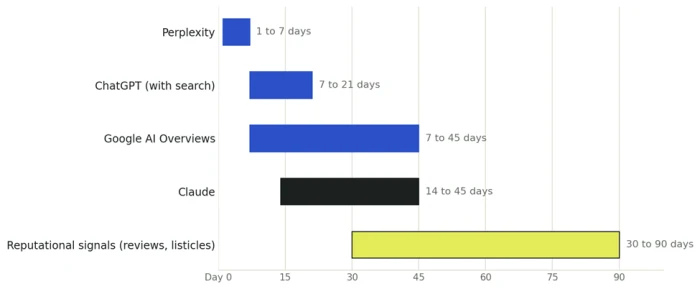
Windows compiled from measured results reported by Authority Tech, Am I Cited, and earned-media timeline studies. Individual results vary with domain authority, crawlability, and query competition.
Platform by platform
Perplexity: the fastest first citation

Perplexity performs a live web search for every single query and always cites its sources. It visits roughly 10 pages per query but cites only 3 to 4 of them, favoring fresh, factual, well-structured pages on authoritative domains. [8] It also has the strongest recency bias of any major AI engine, with a measurable boost for content published or updated within the last 30 days. [9] Structural fixes such as FAQ schema and rewritten opening paragraphs have been observed appearing in Perplexity answers within 2 to 7 days, and a placement on a high-authority publication can surface in 1 to 7 days. [1, 3]
ChatGPT: hours if Bing has you, weeks if not
ChatGPT operates on two layers: a static training base plus a Bing-powered retrieval layer for queries that need current information. When a page is properly indexed by Bing and submitted via IndexNow, ChatGPT has been shown to pick up new information within hours to a couple of days. In practice, most sites see structural changes reflected in 7 to 21 days. ChatGPT also skews strongly toward established authority, favoring major publications, Wikipedia, and well-known industry sites, so newer or smaller domains wait longer here than on Perplexity.
Google AI Overviews: tied to your organic index
AI Overviews draw overwhelmingly from pages that already rank in Google's organic results, with analyses attributing about 97 percent of cited sources to existing organic rankings. Citation eligibility therefore follows normal Google indexing timelines: roughly 1 to 3 weeks for strong earned-media placements, and up to 45 days for structural changes on your own site.
Claude: the patient one
Claude leans more heavily on training data and authoritative sourcing, and measured studies place first citations for structural optimizations in the 14 to 45 day range. [1] Content that earns citations here tends to be evidence-dense: clear definitions, numbers, comparisons, and procedural steps. [9]
| PLATFORM | HOW IT FINDS SOURCES | FIRST CITATION WINDOW | WHAT IT FAVORS |
|---|---|---|---|
| Perplexity | Own real-time web index, live retrieval on every query | 1 to 7 days | Freshness, structure, and community sources such as Reddit and Quora |
| ChatGPT | Training data plus Bing-powered retrieval for current queries | 7 to 21 days, hours possible via Bing and IndexNow | High-authority domains, Wikipedia, and major publications |
| Google AI Overviews | Built on top of the existing organic search index | 7 to 45 days | Pages that already rank organically for the query |
| Claude | Training data with selective web retrieval | 14 to 45 days | Evidence-dense pages with definitions, numbers, and comparisons |
A realistic week-by-week expectation
Agencies running structured 90-day AI visibility programs report a consistent pattern: initial citations by week 3, measurable citation-rate improvement by week 8, and clear pipeline impact by day 90. Combined with indexing research, a reasonable expectation looks like this.
WEEKS 1 TO 2
Indexing and first flickers
Pages get crawled and indexed by Bing and Google, and Perplexity picks up crawlable content. Early, sporadic citations may appear on retrieval-based engines, usually on low-competition queries first.
WEEKS 3 TO 4
First reliable citations
This is the typical window for a first genuine citation on ChatGPT and Perplexity for teams doing structured optimization work, matching the week 3 milestone reported across client programs.
WEEKS 5 TO 8
Consistency
Citations stop being one-off events and start repeating across related queries. Research places consistent citation behavior at weeks 5 to 6, with measurable citation-rate improvement by week 8.
WEEKS 9 TO 12
Multi-platform visibility
Slower engines such as Claude and AI Overviews catch up, reputational signals from reviews and listicles begin registering, and referral impact becomes visible in pipeline data around day 90.
What actually speeds up the clock
▪ Answer the query in your opening lines. Roughly 44.2 percent of LLM citations are extracted from the opening zone of a page, so rewriting your first one to two sentences to directly answer the target question, ideally with a specific number or named source, is the highest-leverage fix available.
▪ Get indexed by Bing and use IndexNow. ChatGPT's retrieval layer runs on Bing, and proper indexing plus IndexNow submission is what compresses its timeline from weeks to hours or days.
▪ Keep content visibly fresh. Perplexity applies a measurable boost to content published or updated within the last 30 days, including current-year statistics and updated structured-data timestamps.
▪ Allow AI crawlers. Perplexity indexes quickly, often within days, but only if its crawler can access your site.
▪ Show up in communities. About 46.7 percent of Perplexity's top-cited sources are community-style platforms such as Reddit, Quora, and niche forums, so an active presence where your audience asks questions raises your odds well beyond your own domain.
▪ Add FAQ schema and modular structure. Pages that influence AI answers tend to be modular and rich in extractable elements: definitions, numerical facts, comparisons, and step-by-step procedures.
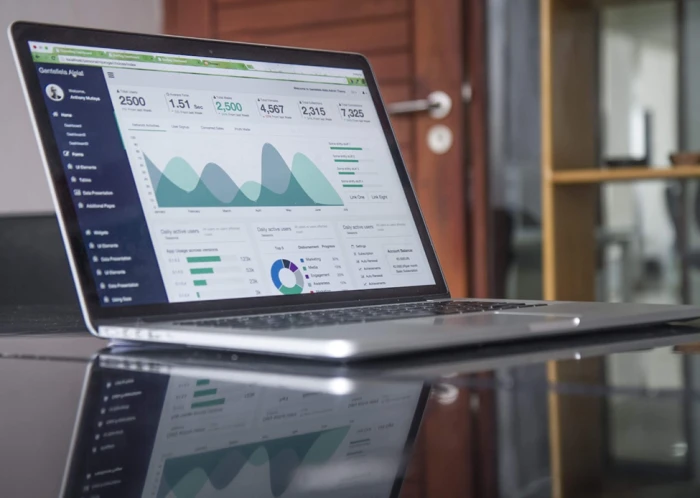
Citation growth compounds once the first ones land. Photo by Carlos Muza on Unsplash.
What counts as good once citations start
A single citation is a milestone, not the goal. The working metric in AI search is citation frequency: the share of buyer-relevant prompts where your content appears as a cited source. Benchmarks for B2B SaaS put a healthy target at 20 to 30 percent of tracked prompts, with anything below 10 percent effectively invisible and above 40 percent category-leading. Seed-stage companies realistically start at 2 to 8 percent.
84.9% of Google AI Overview responses include cited sources, with Google AI Mode at 76.3 percent. | 11% of sites are cited by both ChatGPT and Perplexity. Platform fragmentation is extreme, so track each engine separately. | 46x difference in brand citation rates found across platforms in a 2026 study of 34,234 AI responses, with ChatGPT at 0.59 percent and Perplexity at 13.05 percent. |
The fragmentation numbers matter for expectations. Getting cited on Perplexity in week 1 tells you very little about when ChatGPT will follow, and a strategy tuned for one engine can leave you invisible on another.
Why the wait is worth it
The commercial case for enduring the 2 to 6 week ramp is unusually strong. LLM-referred traffic has been measured converting at 14.2 percent versus 2.8 percent for organic search, a roughly 5x difference. Pages cited in AI Overviews have been found to earn 35 percent more organic clicks than non-cited competitors on the same results page. And the feedback loop itself is fast by search standards: 90 days from start to pipeline impact, against 6 to 12 months for traditional SEO.
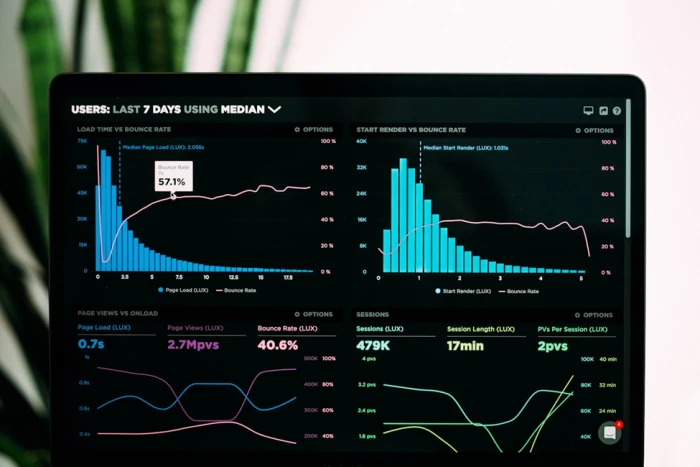
Most AI referral traffic hides under Direct in default analytics. Photo by Luke Chesser on Unsplash.
One warning: your analytics will lie to you
Many teams get their first AI citation weeks before they realize it. Most analytics platforms attribute AI-referred visits as Direct traffic because referrer headers are stripped in transit, so the citation shows up in answers long before it shows up in your dashboard. Two fixes help: ChatGPT now appends utm_source=chatgpt.com to outbound links, which GA4 can surface in referral reports, and server-side detection catches what client-side analytics miss. Pair either with a citation-monitoring tool that runs your target prompts on a schedule, so you catch the first citation the day it happens rather than a month later.
The tools that catch your first citation
You cannot manage a timeline you cannot see, and manually running prompts across five engines every morning does not scale. That is why AI visibility tracking has become its own software category, and it matured fast: the market raised more than 300 million dollars in funding between summer 2025 and spring 2026, and there is now a credible tool at every budget, from 29 dollars a month to enterprise contracts. These platforms run your target prompts on a schedule across ChatGPT, Perplexity, Gemini, Claude, and Google's AI surfaces, then report mention rate, citation frequency, share of voice, sentiment, and in some cases revenue attribution.

Citation tracking turns AI visibility from guesswork into a reviewable dashboard. Photo by Austin Distel on Unsplash.
The current landscape by tier
The market has sorted itself into clear tiers. Profound is the enterprise category leader, with 155 million dollars raised, a 1 billion dollar valuation, and Fortune 500 clients. Peec AI is the fastest-growing mid-market challenger, reaching over 4 million dollars in annual recurring revenue within ten months. Otterly.ai is the most accessible entry point, and the legacy SEO suites such as Semrush and Ahrefs have bolted AI modules onto their existing platforms, which reviewers describe as the most widely used but shallowest option.
| TOOL | TIER | REPORTED PRICING | STANDOUT CAPABILITY |
|---|---|---|---|
| Otterly.ai | Entry level | From 29 dollars per month | Weekly URL-level citation analysis with link position tracking over time, plus a GEO audit that checks crawlability and structured data |
| Peec AI | Mid-market | Roughly 89 to 199 euros per month | Domain and URL-level citation tracking that separates used versus cited sources and auto-classifies domains as editorial, corporate, UGC, reference, or institutional |
| Profound | Enterprise | Enterprise plans reported from around 499 dollars per month | Source-level citation intelligence at scale with SOC 2 compliance and governance features for large teams |
| Semrush AI Toolkit | Suite add-on | Around 99 dollars per month on top of a Semrush plan | AI Search Site Audit included on every plan, even the free tier, with cited domains and URLs shown per tracked prompt |
| Ahrefs Brand Radar | Suite add-on | Up to 699 dollars per month and above | Cited Domains and Cited Pages reports with API access for teams already living in Ahrefs |
Beyond these five, a second ring of well-funded, enterprise-focused platforms serves specific niches, including Bluefish, Scrunch, Evertune, and AthenaHQ, while mid-market alternatives such as LLMrefs and ZipTie run in the 79 to 300 dollar monthly range.
What separates a good tool from a dashboard
Independent comparisons evaluate these platforms on five dimensions: platform coverage across ChatGPT, Google AI Overviews, Gemini, Perplexity, Claude, and Copilot, prompt methodology, data depth including share of voice and sentiment, actionability, and pricing transparency. Two capabilities matter most for catching a first citation early. The first is URL-level citation capture, meaning the tool records exactly which page was cited and where the link sat in the answer, not just that your brand was mentioned somewhere. The second is citation source analysis: most leading tools now expose and classify every cited domain, which shows you whether an engine is pulling from editorial coverage, forums, or your own site, and therefore where to invest next. Reviewers also note that the real dividing line is whether a tool stops at the alert or helps you fix the gap it found.
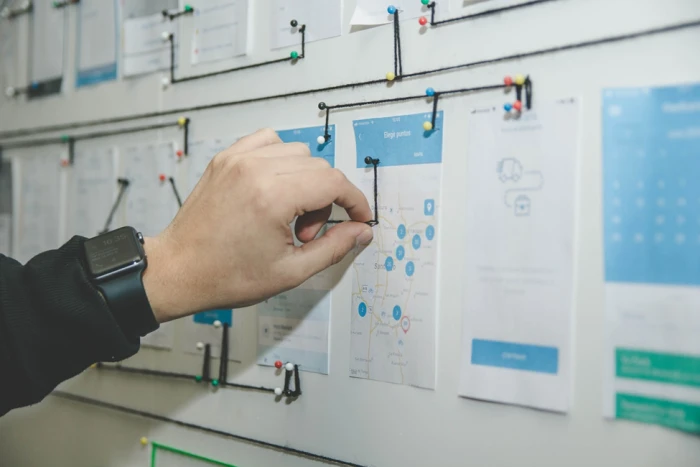
Set up prompt tracking before you optimize, so day one becomes your baseline. Photo by Kaleidico on Unsplash.
Can you track it for free?
Partially. You can manually run your branded prompts across ChatGPT, Perplexity, and Gemini and log the results in a spreadsheet, and Google Search Console now shows some AI Overview impressions. Semrush's AI Search Site Audit is also available on its free plan. But repeatable share-of-voice measurement across platforms realistically requires a paid tool, and reviewers warn that comparison data in this category rots fast, so any tool list older than a quarter deserves skepticism.
The practical takeaway for the timeline question: set up tracking before you publish, not after. If your monitoring starts on day one, the first citation registers the week it happens, your baseline is real, and the week 3, week 8, and day 90 milestones become measurable checkpoints instead of guesses.
The bottom line
If your content is crawlable, well-structured, and answers a real query in its opening lines, a first Perplexity citation inside a week is a realistic goal, ChatGPT typically follows within 1 to 3 weeks, and the slower engines arrive over 6 weeks or so. Budget a full quarter before judging the program, track each platform separately, and treat the first citation for what it is: the starting line of a compounding channel, not the finish.