
THE SHORT ANSWER Optimizing content for AI Overviews means writing pages that Google can easily retrieve, extract, verify and reuse. The unit of victory is no longer the page but the passage, because when someone searches, Google splits the query into sub-questions, pulls the passages that answer each one, and stitches a few of them into a summary that names its sources. You earn a place in that summary the same way you earn trust anywhere. Lead each section with a direct answer, support it with dated and checkable evidence, keep the page fast and crawlable, and describe yourself the same way everywhere so other trusted sites reinforce it. There is no secret file or schema that unlocks it; clarity and corroboration do. |
What an AI Overview actually is
A summary written by a model, sitting where the links used to be.
An AI Overview is the AI-generated block that Google places at the very top of a results page, above the familiar list of blue links. Instead of listing ten pages and letting you decide, it reads across many indexed sources, writes one concise answer, and attaches a short list of citations.
It launched broadly in May 2024 as the successor to the Search Generative Experience, and in the two years since it has grown from a sliver of queries to something most searchers now see first.
The shift is not cosmetic. For a quarter of a century the goal everyone chased was a ranking that led to a click, but the Overview puts a finished answer in front of that ranking, so for many queries the searcher reads it and never clicks.
It also differs from the featured snippet it resembles. A snippet lifts one passage, word for word, from a single page that already ranks, whereas an Overview draws from several sources at once, writes its own text, and then credits the pages it used.
So your goal is no longer to own one perfect quotable sentence but to be one of the sources the model trusts enough to build on. Overviews are not the same as AI Mode either, but the two share an index and retrieval engine, so optimising for one helps the other.
Why this matters in 2026, not some future year
The traffic math has already changed, and it has changed against the click.
The reason to act now is that the behaviour has already shifted and the data is no longer speculative. By early 2026 AI Overviews appeared on about 48% of tracked Google queries, up from roughly 31% a year earlier according to BrightEdge.
So for a large share of what people search, the first thing they meet is a paragraph a model wrote rather than a page you did.
The prevalence is not spread evenly, and the skew is part of the strategy. Informational and how-to queries trigger an Overview far more often than commercial ones, so a how-to guide is far more exposed than a product or pricing page.
If most of your traffic is explanatory blog content, you are squarely in the path of the change. If it is bottom-of-funnel pages, you have a little more time, though not indefinite time.

The impact on clicks is real, and the honest answer is a range rather than one dramatic figure. Different studies put the decline on Overview queries anywhere from around 15% to over 60%.
Seer Interactive tracked a fall from roughly 1.76% to about 0.6% at the trough before a partial recovery through 2026, and Pew found people clicked a result on only about 8% of visits when an Overview appeared, versus roughly 15% without one.
The pattern is consistent. Clicks fall wherever these summaries appear, the size depends on query type and device, and the floor has settled permanently lower for informational content. Forecasting with the old rates is like budgeting your electricity bill on pre-2022 prices.
~48% The share of tracked Google queries showing an AI Overview by around February 2026, up from roughly 31% a year earlier, per BrightEdge. Where one appears, independent studies measure organic click-through falling by anywhere from 15% to over 60% depending on method, device and query type. See the roundup at SQ Magazine’s AI Overviews statistics. |
There is a genuinely constructive way to read all of this. Being cited inside an Overview is not the same as losing the click; it is often the new version of winning it.
Seer found that brands cited inside an Overview earn about 120% more organic clicks per impression than uncited brands on the same queries. The visitor who does click through arrives further along, with the field already narrowed, which is why that traffic tends to convert better than the raw volume suggests.
So the task is not to fight the summary but to be inside it. And because roughly half of businesses have no presence there at all, the competition to get in is far more open than page one of classic Google ever was.
How AI Overviews choose their sources
One query becomes many. A passage wins by answering one of them completely.
To optimise for the system you need a model of how it behaves, and the key concept is query fan-out. When a search arrives, Google does not simply match your words; it reads the intent behind them and breaks the single query into a bundle of related sub-questions.
A search for how to speed up a website might fan out into separate retrievals about image compression, server response, caching, scripts and mobile performance, all run in parallel. Google then pulls the best passages from across many pages and assembles one answer. Analyses suggest eight to a dozen sub-queries per AI Mode search, and other engines do something similar.
Three consequences follow, and together they reorganise how you write.
First, retrieval happens at the passage, not the page, so a self-contained section can be pulled in even when its page does not rank well. That is exactly why content from deep in the results regularly turns up as a citation.
Second, the candidate pool comes from Google’s index, so anything that harms crawling, rendering or indexing quietly removes you before your writing is ever read.
Third, the model favours passages that are easiest to trust and reuse: those that state a claim plainly, back it with a checkable detail, agree with other sources, sit on a known authority, and carry a recent date.
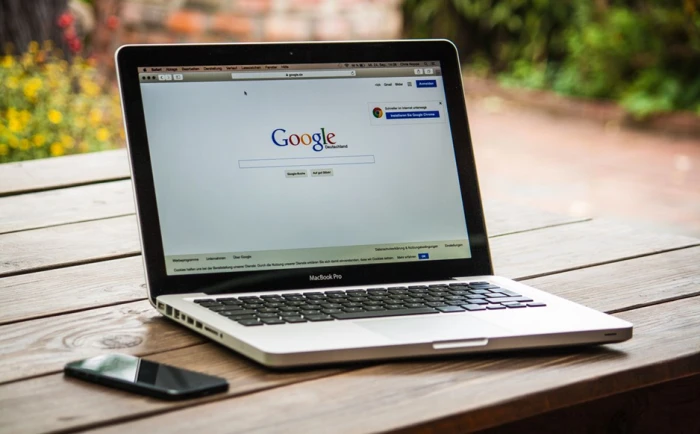
Google extracts at the passage level, so each section must make sense on its own, as if it were the only part the model reads.
The passages that get chosen even have a measurable shape. A large study found the most-extracted ones cluster around 130 to 170 words, long enough to make a point and short enough to lift cleanly.
They also follow the same rhythm: answer the question immediately, then expand it, then add evidence or a caveat before moving on. That structure is not a style choice; it mirrors how the retrieval system reads and reassembles content, which is why it recurs across independent analyses of what gets cited.
Writing content that gets pulled into the answer
Lead with the answer, prove it with something checkable, and make every section stand alone.
One discipline matters more than the rest combined: lead with the answer, then earn it. Normal articles build toward a conclusion, but Overviews want the payoff first, and a passage whose point is buried in paragraph nine gets skipped for one that puts it up top.
So write each heading as the question a buyer would ask, answer it in the first sentence, and only then supply the evidence and context. A useful test: open your three key pages and ask whether each section would make sense if it were the only thing someone read. Wherever the answer is no, that is your first rewrite.
The second discipline is specificity, because a checkable claim can be corroborated and a vague one cannot. "Our platform is fast and scalable" gives the model nothing to verify.
"p99 latency of 42 milliseconds at ten thousand queries per second, on our March 2026 benchmark" gives it a number, a condition, a date and a reason to believe you. The strongest form is original data, such as a benchmark or survey, because it turns you into a source that others cite, which is the most durable visibility there is.
This is not a new idea dressed up for the AI era. The widely referenced Princeton study of generative-search visibility found that adding statistics, direct quotations and clear sourcing lifted a source’s visibility in generated answers by as much as 40%, and you can read the methodology on arXiv for the underlying detail.

The third discipline is to cover the questions buyers actually ask an assistant, not the keywords they once typed. Because the query fans out, answer each sub-question on your domain: what the thing is, what it costs, how it compares, who it suits, what it integrates with and where its limits are.
Comparison content is the most neglected and the most valuable of these, because someone will answer it whether you do or not. If the only comparison Google can find was written by your competitor, do not be surprised by how you come out of it.
A few traps are worth avoiding. Do not stuff headings with long-tail query variations, since Google understands synonyms. Do not chop prose into fragments. And above all, do not publish thin, machine-generated pages at volume, which is exactly the content rankers skip.
A ranking can coast for years on old work. A citation cannot. Refresh the pages that matter, or watch the summary quietly replace you with a source that did.
The fourth discipline is to make trust visible on the page. Put a named author with real credentials on every substantive piece, show a published date and an honest last-updated date, and link to the sources you relied on so a model can corroborate your claims.
Freshness does real work, since most AI citations come from pages updated within the past year, and pages not refreshed at least quarterly are several times more likely to lose the citations they hold.
That is why this is a standing programme, not a one-off project. The answer is rebuilt on every search, so a page that stops being maintained does not slide down a ranking, it simply stops being chosen.
• Answer first. The heading states the question; the first sentence beneath it answers it directly.
• Self-contained sections. Each should make full sense alone, in roughly 130 to 170 words.
• Checkable, not adjectival. Replace "fast and scalable" with a number, a condition and a date.
• Cover the sub-questions. Definition, cost, comparison, fit, integrations and limits each deserve an answer.
• Show your working. Named author, real credentials, an honest date, and outbound source links.
• Keep a refresh cadence. Revisit key pages quarterly and re-stamp the date only when content changed.
The technical foundations that make you eligible
If the page cannot be crawled, rendered and indexed, none of the writing matters.
The technical side is mostly ordinary search with one extra emphasis, and it matters because it silently disqualifies pages before their content is judged.
Because Overviews and AI Mode use the same index as classic search, the fundamentals are load-bearing: return a clean 200, keep main content in server-rendered HTML rather than behind JavaScript some fetchers skip, keep pages fast, point internal links at what you want cited, and keep the sitemap accurate.
Since retrieval favours what it can read effortlessly, extractability matters as much as crawlability, which means clean heading hierarchy, scannable structure, real alt text and no script-dependent rendering.
Google’s own guide to optimising for its AI features is worth reading because it deflates the mystique, stating plainly that there is no special file, schema or format required to be eligible.
The issue that catches most sites is not robots.txt but the layer above it, because a CDN or bot-protection rule often blocks the very crawlers robots.txt welcomes. The file looks open on paper while a firewall upstream turns those agents away.
The fix is dull and effective: audit your server logs by user agent every quarter, confirm the crawlers you mean to admit get clean responses, and check that no plugin quietly changed the rules.
Be clear-eyed about hyped files, chiefly llms.txt. It sounds sensible, a Markdown summary of your site, but a study of over a hundred thousand sites found it is almost never fetched by the major AI crawlers and is ignored by Google. Publish one if you like, but do not mistake it for a strategy.

Structured data does not force a citation. It removes the ambiguity about who you are, what you published and when, which is what otherwise gets you passed over.
Structured data sits in a similar place, over-sold as a magic key and genuinely useful as a clarifier. No schema type unlocks Overviews, and marking up invisible content is a policy violation, so use it narrowly: mark up what is on the page, mirror the visible content, and validate it.
Done that way, valid schema.org markup lets a crawler confirm without guessing that this is an Article, by this Person, on this date, by this Organization, about this Product, and that feeds the entity understanding every engine relies on.
A few types are worth prioritising: Organization on the home page carrying your canonical name, Person for authors linked to real profiles, Article with accurate dates, Product or SoftwareApplication with real pricing, and FAQPage where a page genuinely answers questions.
Beyond markup, the deeper work is entity clarity: decide on one canonical sentence and paragraph describing what you do, and use those words everywhere you control. A hundred sources describing you the same way teaches the model a confident concept of you; ten different descriptions teach it uncertainty, and uncertain entities get dropped.
The off-site half you do not fully control
Most of what an AI says about you was written by someone else, so make that record accurate.
The most uncomfortable finding in the research, and the one tidy checklists leave out, is that most sources feeding answers about vendors are not the vendors’ own sites. Across software queries, roughly seven in ten citations point to earned media, review sites, forums and third-party comparisons, and for category questions it leans further outward.
This is not the engines being perverse; a claim made about you by someone else is more credible than the same claim made by you. The places where independent experience lives, such as Reddit, G2, Capterra, the trade press, analysts and YouTube, are exactly the ones worth trusting.
So much of the work happens on domains you do not own, and what a searcher reads in an Overview is largely a synthesis of what reviewers, users, journalists and rivals have written.
Your job is to make that record accurate, current and consistent: ask satisfied customers for recent reviews on the platforms engines cite, correct stale listings in the open, show up honestly where buyers ask questions, and pitch specific claims to the trade press.
What does not work is easy to name. Paid placement dressed as coverage, wire releases and link farms barely register in the data and can erode trust when a model associates them with your name.
GO DEEPER Answer Engine Optimization (AEO): The Complete Guide to Getting Cited by AI AI Overviews are one surface in a much larger shift. Our full AEO guide covers how ChatGPT, Perplexity, Gemini and Claude each choose their sources, what the 2026 citation data shows across every engine, and the content, technical and off-site programme that earns a place in all of them, including a 90-day playbook a small team can run without buying anything. |
How AI Overviews compare with the other engines
The same page can be cited everywhere, but each engine gets there a different way.
It is tempting to treat "AI search" as a single target, but the engines behave differently enough that a brand can be prominent in one and invisible in another.
Because Overviews and AI Mode run on Google’s own index and use query fan-out, they favour pages that already rank and Google-owned surfaces such as YouTube. Since most Overviews cite at least one URL from the top twenty results, a strong classic-search foundation is the most reliable base.
The retrieval-first assistants differ. Perplexity cites on nearly every answer and leans on fresh, dated content and Reddit; ChatGPT mixes its own crawler with a third-party index, shifts month to month, and sends the most referral traffic; and Claude searches the web when needed and quotes conservatively from clearly sourced passages.
The lesson is not to chase each engine’s quirks but to recognise what they reward in common: clarity, specificity, freshness and corroboration. Only a small fraction of domains are cited by more than one engine, and that shared foundation is what makes multi-engine visibility possible.
| Surface | How it retrieves | What it rewards |
|---|---|---|
| Google AI Overviews / AI Mode | Google’s index, query fan-out | Pages that already rank; YouTube and community content; SEO fundamentals |
| ChatGPT search | OpenAI crawler plus third-party index | Wikipedia and Reddit; volatile; largest referral volume |
| Perplexity | Own crawler, retrieval on nearly every answer | Fresh, dated content; heavy Reddit reliance |
| Claude | Live web search when needed | Conservative quoting; clearly sourced passages |
Measuring whether any of it is working
Start with a prompt set and a spreadsheet, not a platform.
The core instrument is not a tool you buy but a prompt set you write, and building one is the highest-return afternoon in this whole discipline. Write down the twenty-five to a hundred questions a buyer would ask before choosing between you and your rivals, then run each through Google and the other engines on a fixed schedule.
Each time, record five things: whether you were absent, mentioned, cited or recommended; which competitors appeared instead; which sources were cited; whether the description of you was accurate; and whether any link pointed where you wanted. Doing this in a spreadsheet first puts you ahead of the majority of marketers, who track nothing at all.
Google has begun to help here too, since its generative-AI performance reports in Search Console now show Overview and AI Mode impressions broken down by page, country and device, though they still stop short of telling you which prompt triggered an appearance, which is why the manual prompt set remains indispensable.

Track citation share and accuracy over time, not just clicks. A page can lose clicks while gaining the kind of visibility that ends in a decision.
Two principles prevent the most common misreadings of this channel. The first is to separate volume from value, because AI sessions look small next to organic search, so judging by clicks alone understates them.
Watch conversion, citation share, sentiment and branded search instead, since someone who reads an Overview and then Googles your name is a signal that the summary did its job even though no referral was tracked.
The second is to treat citation status as its own driver, since cited brands behave very differently from uncited ones on the identical query. Whatever you measure with, measure outcomes rather than activity: not how many prompts you appear in, but whether those appearances are accurate and turn into pipeline.
A 90-day plan a small team can run
Baseline first, fix what you can be found for, then amplify off-site.
All of the above condenses into a sequence a single owner can run in a quarter without buying anything, and the order matters: measure before you change, fix access before you rewrite, and start the slow off-site work early because it compounds least quickly.
Assign one person outside the day-to-day content queue, give them the prompt set and a refresh calendar, and review the numbers monthly with whoever owns pipeline.
Days 1 to 30 | Baseline and access
Find out where you stand
Write the prompt set and run it across every engine, logging the five states plus the rivals and sources that appear instead of you. Audit robots.txt by user agent against your server logs and CDN rules, verify the site in Search Console and Bing, and submit your sitemaps. Read the top twenty sources cited for your category, and agree the one canonical sentence and paragraph everything else aligns to.
Days 31 to 60 | Fix and publish
Rewrite for extraction and clarity
Rewrite your three-to-five key pages so each section is self-contained, answer-first, dated, authored and sourced. Publish the honest comparison pages, a plain definition page if your category is new, and a pricing page with real numbers. Add or fix the Organization, Person, Article, Product and FAQPage markup, align every profile to the canonical description, and start the quarterly refresh calendar now.
Days 61 to 90 | Amplify and measure
Work the gaps, then re-run the baseline
Ask customers for reviews on the platforms engines cite, correct stale listings, pitch one piece of original data, and answer real questions where buyers ask them. Re-run the full prompt set and compare it with day one. Read the first month of Search Console and Bing AI reports, then decide on the evidence which prompts to invest in next.
The bottom line
Clarity, evidence and corroboration: the strategy that survives every model update.
AI Overviews have not replaced search, and anyone promising that AI referrals are already your main channel is describing a year that has not arrived. What has arrived is a world where the buyer’s first encounter with your category is a paragraph a model wrote, built mostly from sources you do not control, on a page most people no longer click.
The work of earning a place in that paragraph is not exotic and it is not a trick. Lead every section with its answer and back it with dated, checkable evidence, keep the page fast and crawlable, describe yourself the same way everywhere, and earn the reviews and coverage the engines already trust.
Because roughly half of businesses have no presence in these answers and only a small minority measure them, twenty-five prompts in a spreadsheet this week would put you ahead of most rivals. That gap, like the one search left open around 2003, will not stay open for long.