

Why Being Better Rarely Wins
Every market with a trusted leader eventually gets a challenger who tries to out argue that trust directly, with a better feature list, a faster product, a friendlier sales team. Almost all of them lose, and not because their product is worse.
Marketing strategists Al Ries and Jack Trout made a case in 1980 that still holds up: a buyer's mind does not rank products by feature comparison, it ranks them by an existing mental order that resists new information. Their research pointed to a rough historical pattern in category after category, where the first strong brand into a buyer's mind tends to hold roughly twice the long term share of the second brand, and the second roughly twice the share of the third. Displacing the top of that order is rare, and rarely happens by claiming to be better at the exact thing the leader is already known for.
Strategists who study challenger brands describe the trap plainly: a challenger who positions as better at the things the category leader already values is not really challenging anything, they are following. The incumbent will always have more case studies, more visible customers, and more years of accumulated proof behind the same claim. Fighting on the leader's existing criteria means fighting on ground the leader has been fortifying the longest.
The challenger campaigns that actually worked did not solve this by trying harder at the same fight. They picked a different one. What follows is the framework behind those campaigns, and then how to apply it.

Positioning theory treats competition as a contest for a fixed mental space, not a contest of features. Photo via Wikimedia Commons, CC BY-SA 4.0.
Three Ways to Change the Fight
Across the challenger campaigns worth studying, the same three moves show up again and again. Each one avoids the incumbent's own scorecard rather than trying to win on it.
MOVE ONE, REFRAME THE CATEGORY Instead of arguing you are a better version of the leader, change what the buyer is supposed to be evaluating in the first place. Salesforce did this against Siebel Systems in the CRM market by reframing the entire decision around subscription access instead of installed software, reaching roughly a billion dollars in revenue by 2009 and roughly ten billion by 2018, according to reported figures, while Siebel was acquired by Oracle in 2005 as its on premise model lost ground. DuckDuckGo did the same to Google, reframing search around whether the engine tracks you rather than how good its results are. In May 2026, after Google shipped a more AI driven search experience some users felt was forced on them, DuckDuckGo reported a sustained spike in app installs, up as much as 30.5 percent on Android over six consecutive days, according to TechCrunch, proof that a reframed position pays off directly when the leader's own move confirms the challenger's argument. |

A reframed category asks the buyer to judge on a new axis entirely, one the incumbent was never built to compete on. Photo via Wikimedia Commons.
MOVE TWO, TURN THE LEADER'S STRENGTH INTO A LIABILITY Strategists sometimes call this judo positioning, using the incumbent's own size or dominance as the force that beats it. In 1962, Avis had lost money for thirteen straight years against market leader Hertz. Its agency wrote an ad admitting Avis was only second place, then argued that was exactly why customers should choose it, a company in second place has to try harder to earn every customer while the leader can coast on being the default. The tagline, We Try Harder, ran for roughly fifty years. The same mechanic can point outward: Tylenol's rise against aspirin in the 1970s succeeded largely by publicizing aspirin's effect on the stomach lining, a real property of the older, dominant product that had simply never been made central to how customers thought about it. |
$3.2M to $1.2M Avis moved from an annual loss to its first profitable year within about twelve months | 61 to 49 Hertz's share of the two company total, 1963 to 1966, by one widely cited account | ~50 years How long the We Try Harder line stayed in use |
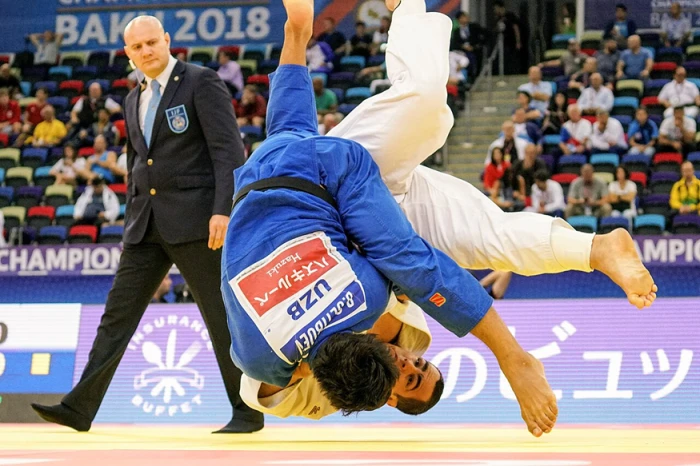
Judo positioning uses the opponent's own weight and momentum against them, rather than meeting force with force. Photo via Wikimedia Commons, CC BY-SA 4.0.
MOVE THREE, CLAIM A NICHE THE LEADER CANNOT FOLLOW INTO Ries and Trout called this finding a creneau, a French word for gap, an unclaimed position adjacent to the leader. The strongest version is not just unclaimed, it is structurally unclaimable. Google's core business depends on collecting search data to sell targeted advertising, so it cannot simply copy a no tracking default into its main product without damaging the business model that funds it. DuckDuckGo's niche is not defended by its marketing budget, which is tiny next to Google's. It is defended by the fact that following the challenger there would cost the leader something it cannot afford to give up. |
Put together, these three moves form a small framework worth having in view all at once.
| MOVE | WHAT IT DOES | REAL WORLD EXAMPLE | MAIN RISK |
|---|---|---|---|
| Reframe | Changes what the buyer is supposed to judge you against, away from the incumbent's strongest ground | Salesforce reframing CRM around subscription access, DuckDuckGo reframing search around privacy | The new category has to matter enough to the buyer to justify switching, or the reframe reads as a distraction |
| Judo | Turns the incumbent's own size, dominance, or long standing strength into a reason for doubt | Avis admitting it was second place, Tylenol highlighting aspirin's side effects | Only works if the claimed advantage is real and can be proven operationally, not just written in an ad |
| Niche | Claims a specific position the incumbent's own business model makes it structurally unable to copy | DuckDuckGo's privacy position, defensible because Google's ad revenue depends on tracking | A niche the leader could copy without real cost is not a moat, and will get copied once it looks profitable |
Putting the Framework to Work
Choosing and using one of these three moves is itself a sequence. Skipping a step is the most common reason a reframe, a judo position, or a niche claim fails to hold up once a real incumbent pushes back.
| 01 | Audit the incumbent honestly Before picking a position, write down what the incumbent actually proves well, and to whom, without dismissing it. Most challenger positioning fails at this step because it starts from what the challenger wishes were true about the leader rather than what buyers actually believe. |
| 02 | Find the dimension that flips Look for the one place where the incumbent's strength, taken to its logical end, starts to look like a weakness to a specific segment of buyers. Scale can look like slowness. Being the default can look like complacency. Broad coverage can look like a lack of focus. That flip point is the position worth building around, not a longer feature list. |
| 03 | Run the structural test Ask directly whether the incumbent could copy the position next quarter without hurting their existing revenue, their existing customers' expectations, or their existing channel relationships. If they could copy it cheaply, it is a marketing angle, not a moat. If copying it would force them to cannibalize the business that makes them the incumbent, the position will hold. |
| 04 | Commit to it for years, not quarters Avis ran the same line for roughly five decades. DuckDuckGo has repeated the same privacy argument for close to two decades with no meaningful deviation. Positioning research is consistent on this point, switching the message every year or two never lets a position accumulate the recognition that makes it work. |
| 05 | Make it operationally true Avis employees reportedly wore We Try Harder buttons as an internal standard, not only an external slogan, so the claim showed up in how the company behaved, not only in how it advertised. A position the product and the organization cannot actually deliver on will be found out quickly, and does more damage than never making the claim at all. |

Two competitors sharing the same counter, the same customers, and almost the same product. Step one is looking at that counter honestly before deciding what to say about it. Photo via Wikimedia Commons, CC BY 2.0.
When This Actually Works
Positioning against a trusted incumbent is not a coin flip, and it is not a guarantee either. Across the cases in this document, the pattern splits cleanly into conditions that predict success and conditions that predict failure, and the difference has less to do with the cleverness of the line than with what happens after it ships.
HOLDS WHEN The niche passes the structural test from step three, the operational proof described in step five actually exists inside the company, and the challenger commits to the same position for years rather than quarters. Avis, Salesforce, and DuckDuckGo all satisfy these three conditions at once, which is the specific reason all three are still cited as examples decades after their positioning first shipped. |
BREAKS WHEN The reframe is clever but the underlying product cannot deliver on it, the niche looks defensible on a slide but the incumbent could copy it without real cost, or the campaign gets pulled after a year because the numbers did not move immediately. Positioning compounds slower than most marketing budgets and most leadership patience allow, which is the single most common reason a technically sound move still fails in practice, not because the strategy was wrong but because it was abandoned before it had time to work. |
The honest verdict is narrower than either a challenger's pitch deck or a skeptic's dismissal usually allows. This framework works reliably when all three conditions hold together, and it fails predictably when any one of them is missing, which makes the earlier five step sequence less of a suggestion and more of a precondition.
Conclusion
An incumbent's trust is real, earned, and not something a challenger out argues by being better at the same thing. The problem is fixed, the framework is three known moves, the application is a five step sequence anyone can follow, and the verdict is conditional rather than automatic. What decides the outcome is whether a challenger actually works through every step and holds the position long enough for it to compound, or stops after picking a clever line.