
Few people could explain how money actually moves between two banks, how a photograph proves it came from a camera rather than a model, or what a hospital’s scheduling software quietly decides on a patient’s behalf. Almost everyone relies on all three anyway.
That reliance extended to machinery no ordinary person can open up and check is roughly what the industry means by digital trust. For most of computing’s history it sat in the background, assumed until something broke.
It has moved to the foreground for a plain reason: systems have grown more capable and more opaque at the same time, so the distance between what people depend on and what they can verify keeps widening. The argument running through this piece is that digital trust has become a form of infrastructure as load-bearing as electricity and that the same technologies eroding it are the ones now being asked to rebuild it. That circularity is the whole problem.
Defining digital trust, past the buzzword
Digital trust is often treated as a synonym for cybersecurity, or folded into privacy. It is neither. A cleaner definition: trust is the willingness to be vulnerable to a system whose inner workings cannot be fully verified.
The distinction matters because security is a property of the system, while trust is a decision made by the person relying on it. The two drift apart more often than anyone would like. A bank can run excellent security and still command little confidence; a fraudulent app can inspire total confidence right up until it vanishes with the deposits.
Seen this way, trust is not something an organisation simply has. It is granted, provisionally, by everyone downstream and it can be withdrawn far faster than any technical fix can be shipped.
Why now: several pressures arriving at once
Nothing about the idea of trusting technology is new. What changed is that several independent pressures reached critical mass at roughly the same moment, and they compound one another.
● The collapse of “seeing is believing.” Generative models made synthetic media convincing to the naked eye. One industry count put deepfake incidents at around half a million in 2023 and above eight million by 2025, and Deloitte has projected that synthetic material could account for as much as ninety percent of online content. Once any image might be manufactured, the old habit of trusting one’s own eyes stops working.
● The sheer scale of the data economy. Ordinary life now leaves a continuous trail of location, purchases, biometrics, health readings held by parties most people will never knowingly deal with, and frequently by their vendors’ vendors.
● The move to remote-everything. Work, banking, medicine, and government shifted online in a compressed window, transferring trust from people to interfaces, and to counterparties no one ever meets in person.
● The erosion of institutional confidence. Faith in the traditional referees, governments, banks, the press has been sliding for years, so the demand for something to fill that gap lands on technology at the least convenient moment.
Any one of these is manageable on its own. Together they produce a situation where dependence keeps climbing while the ordinary means of checking fall further behind.
The anatomy of digital trust
It helps to stop treating trust as a single quantity. It is a bundle of distinct properties, each able to fail on its own, and each weighed usually without conscious thought before a person leans on a system.
| Component | The question it answers |
| Security | Is the system defended against those trying to break in or misuse it? |
| Privacy | Is information gathered, used, and shared the way it was represented? |
| Reliability | Does it work as expected, consistently, including under stress? |
| Transparency | Can an outsider understand what it does and how it reaches decisions? |
| Integrity | Is the data and behaviour free of tampering or hidden manipulation? |
| Accountability | When something goes wrong, is there a party that answers for it? |
A system can score high on most of these and still collapse on one. A messaging app with strong encryption but no accountability, or a bank with flawless uptime but quiet data-sharing, eventually runs into the component it neglected.
The trust paradox
Here is the uncomfortable centre of the subject. Dependence on complex systems has never been higher, and, in relative terms, public understanding of them has never been lower. The two lines are moving in opposite directions.
Call it the asymmetry of verification. A person can, in principle, glance at a bridge and judge whether it looks sound before crossing. Almost no one can audit a recommendation algorithm, inspect a model’s training data, or trace a single chip through its supply chain. Verification has been priced out of reach for the individual, so trust turns into an act of faith performed at enormous scale.
The natural reflex is to build tools that verify on the public’s behalf. The catch the subject of the next section is that those tools inherit the same difficulty: something still has to vouch for the verifier.
Artificial intelligence as both threat and guardian
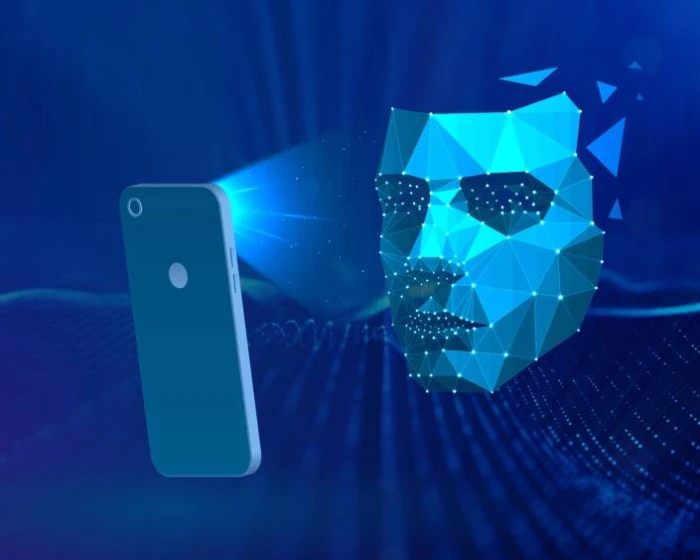
AI sits on both sides of the ledger, which is exactly what makes it the defining trust technology of the moment. The same capability that manufactures a convincing fake can be turned around and pointed at catching one.
| Working against trust | Working in its defence |
| Deepfaked audio, video, and images at negligible cost | Provenance standards that record how a file was made and edited |
| Synthetic identities that pass ordinary onboarding checks | Anomaly detection that flags behaviour no fixed rule anticipated |
| Fraud and social engineering, automated and personalised | Continuous verification of identity and transactions |
| The loss of any safe default that media is genuine | Watermarking and fingerprinting that survive copying |
The most credited answer on the provenance side is C2PA the Coalition for Content Provenance and Authenticity whose Content Credentials attach a signed record of a file’s origin and edit history. Adobe, several camera makers, and a number of large platforms have adopted it, and the effort now counts thousands of members.
A closer look reveals the limit, and it is a sharp one. C2PA does not detect fakes; it records what the signer asserts about a file. Researchers have already produced a valid but entirely forged credential, and shown that an AI-generated image could be signed by a provenance-enabled camera and come out with a clean manifest and no real photographic origin. The seal proves a signature was applied not that the thing inside it is true.
That is the guardian’s flaw in miniature. Verification systems tend to relocate the question rather than answer it. Instead of “is this image real?”, the public is now asked to settle “is this signer honest, and was the tool used the way it was meant to be?” which is not obviously easier.
The economics of trust
Framing trust as a moral nicety badly understates it. It behaves like an asset on a balance sheet: slow and expensive to build, cheap to spend, and ruinous to lose.
The cost side is measurable. IBM’s 2025 analysis put the average breach in the United States at $10.22 million, an all-time high and up nearly a tenth in a single year, even as the global average fell to roughly $4.44 million. The divergence is itself revealing where litigation, regulation, and customer flight bite hardest, the price of lost trust climbs fastest.
On the revenue side, trust shows up as a premium customers will pay, a reason they stay when a cheaper option appears, and a switching cost that quietly protects incumbents. It almost never appears as a line item, which is precisely why it tends to be under-defended right up until it is gone.
How trust is actually engineered
Trust is not summoned by reassurance; it is built into architecture. A handful of approaches have moved from the security fringe into ordinary practice, and they share a common instinct.
● Zero-trust architecture discards the old assumption that anything already inside the network is safe. Every request is authenticated and authorised as though it arrived from the open internet, which sharply limits how far an intruder can move once past the perimeter.
● Cryptographic verification replaces “take our word for it” with arithmetic. Digital signatures and hashes let a recipient confirm that an update, message, or file is exactly what its author sent and has not been altered along the way.
● Decentralised, self-sovereign identity lets a person prove a claim of age, of a qualification without surrendering the underlying data to a central store, shrinking the pool of information any single breach can expose.
● Durable content provenance addresses the weakness of plain metadata, which is trivially stripped out. It pairs an embedded record with invisible watermarking and content fingerprinting so origin can be recovered even after a file has been copied or recompressed.
What these share is a shift away from trusting parties and toward verifying artefacts designing systems so that less has to be taken on faith in the first place.
The governance and regulatory layer
Where individuals cannot verify and markets under-reward trust, regulation steps in as a kind of collective verification: society checking, through rules and penalties, what no single person can check alone.
The European Commission in Brussels, whose AI Act became broadly enforceable in August 2026. Photo: Fred Romero (CC BY 2.0).
The clearest current example is the European Union’s AI Act, whose main provisions became enforceable on 2 August 2026. Its transparency rules require that people be told when they are interacting with AI, that deepfakes be disclosed, and that synthetic content carry machine-readable marking. Penalties for the gravest violations run to €35 million or seven percent of worldwide turnover numbers large enough to move corporate behaviour.
The picture is not tidy. A mid-2026 revision pushed several high-risk obligations out to late 2027 and 2028, and enforcement leans on national authorities that many member states were slow to stand up. That points to a deeper caution: compliance and trustworthiness are not the same thing. A company can satisfy every rule and remain untrustworthy, and a genuinely careful one can still trip over a technicality. Rules set a floor, not a character reference.
When trust breaks
Trust tends to fail in a recognisable pattern, and the specifics are more instructive than any headline figure.
In March 2026, Aura a firm whose entire business is selling identity-theft protection disclosed that an attacker had used a phone-based phishing call to reach an employee account and lift roughly 900,000 records. The irony wrote itself, and that is the lesson: the failure was not exotic. It was a person on a phone, the same weak link behind most of the year’s incidents.
The broader data is sobering less for its scale than for its opacity. The first half of 2026 produced more than 471 million breach notifications in the United States, and in a record three-quarters of them the disclosure withheld how the attack actually happened up sharply from a small minority a few years earlier. Even the reporting of failure is growing less transparent.
And not every alarm is what it seems. A widely shared “breach” of sixteen billion credentials turned out, on inspection, to be old stolen data repackaged and renamed, a reminder that the narrative around trust is itself unreliable, and that being alarmed and being accurate are not the same thing.
Trust is asymmetric: earned slowly, lost in an afternoon, and recovered when it is recovered at all more on the quality of the response than on the size of the breach.
The human dimension
For all the cryptography, trust ends in a human judgment, and humans read cues rather than proofs. Decades of interface design have trained people to equate a padlock icon, a verification badge, or a small provenance mark with safety signals that can be honestly earned or cheaply imitated.
The less discussed danger runs the other way. Over-trust automation bias is the tendency to defer to a system precisely because it is confident and convenient, even when it is wrong. A navigation app steering a driver into a lake is the comic version; a clinician or a loan officer waving through a model’s recommendation without a second look is the consequential one.
Healthy trust, in the end, is calibrated rather than maximal. The aim is not to trust technology more, nor reflexively less, but to trust it in proportion to what it has actually earned which quietly demands the very understanding that the paradox in section four keeps out of reach.
Conclusion
Digital trust is on its way to becoming basic infrastructure: the invisible layer that lets everything else run, noticed mainly when it fails, much as electricity or clean water are. Treating it as a feature to bolt on, rather than a foundation to lay, is the mistake the coming decade seems likely to punish.
The tensions in this piece do not resolve cleanly. The verification tools can be forged. Compliance is not the same as being trustworthy. Disclosure is narrowing even as breaches widen. None of these has a purely technical fix, because trust was never a purely technical problem.
The real risk is subtler than any single hack. It is that institutions get very good at manufacturing the appearance of trust, the badges, the seals, the compliance certificates while the substance beneath them quietly thins. The question worth sitting with is not whether the next system can be secured, but whether people will still be able to tell a system that is trustworthy from one that has merely learned to look the part.