
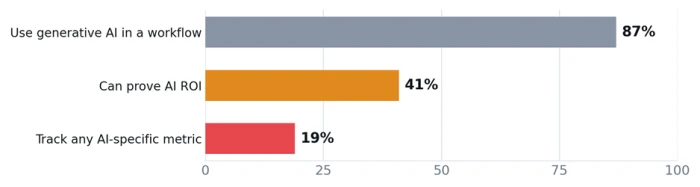
BOTTOM LINE UP FRONT AI is worth the budget, but roughly half of it is misspent as of today. The layers that replace an expensive human step and run on clean data return two to three times their cost. The layers that chase content volume or hide behind an AI label do not, and a rising share of buyers now trusts brands less for leaning on them. Adoption sits near 87 percent, yet only 41 percent of marketers can prove a return. |
The scorecard
Every layer of the stack, graded on its measured return and the trust it earns or loses. Working layers are green, modest returns amber, budget leaks red.
| Grade | Layer | Return | Verdict |
|---|---|---|---|
| A | Content drafting and repurposing Only with human editing and a real plan to distribute it | 3.2x blended ROI | Working |
| A | Personalization engines Only on clean, connected first-party data | 2.7x blended ROI | Working |
| B | Audience and market research Feed it your own data, not public scraps | 2.4x blended ROI | Working |
| B | Paid media bid optimization Needs enough conversion volume to learn from | 30 to 50% less waste | Working |
| B | Support and conversational deflection High ticket volume with a clear human fallback | Proven at scale | Working |
| C | Paid social creative Competes with specialist creative and down-ranked feeds | 2.3x blended ROI | Modest |
| D | Personalization on thin or stale data Produces irrelevant recommendations at scale | No reliable return | Waste |
| F | Generic content at volume Volume mistaken for authority as trust falls | Negative once trust drops | Waste |
| F | Rules-based tools sold as AI Old automation wearing a new label | Nothing new earned | Waste |
| F | Any tool with no workflow or KPIs Bought without integration or a success metric | Unmeasured and often dropped | Waste |
Grades reflect measured returns from McKinsey Global AI Survey (2026) and the trust data cited below.
Evidence
Two forces explain the whole scorecard. On one side, where AI removes an expensive bottleneck it pays back. On the other, where it chases volume it erodes the trust that marketing depends on.
WHERE THE BUDGET WORKS
It replaces a costly human step
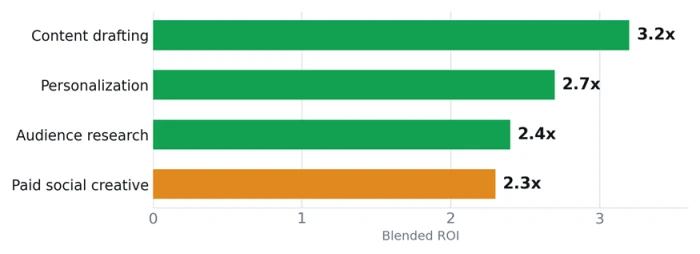
Blended returns cluster where AI takes over a high-cost task. Beyond these, bid optimization cuts wasted ad spend by 30 to 50 percent, and support deflection is a proven winner where ticket volume is high.
Clean data is the gate. One retailer reported an 11x lift in purchase rate once its data was connected. The average marketer also recovers about six hours a week.
Source: McKinsey Global AI Survey and HubSpot, 2026
WHERE THE BUDGET LEAKS
Volume is not authority
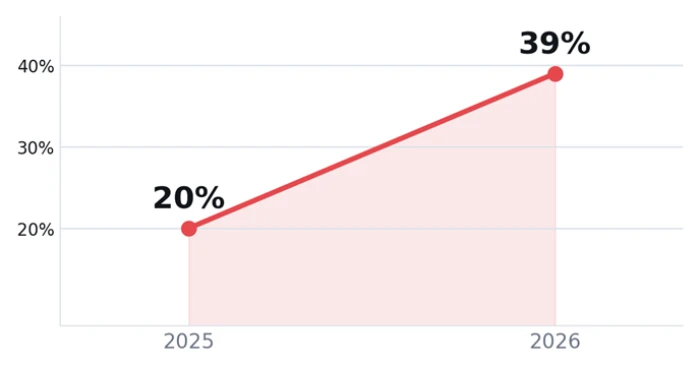
Consumers who trust a brand less for heavy AI use nearly doubled in a year, reaching 54 percent among Gen Z. Mentions of AI slop rose 200 percent, and most were negative.
Quality is blunt too. Unedited AI content earns trust from about 4 percent of readers, while human-edited AI pages cut bounce rates by around 73 percent.
Source: Fractl and Search Engine Land, 2026
Why the waste is growing
Budgets scaled faster than the ability to measure them, which is the exact condition that lets spend leak unnoticed.
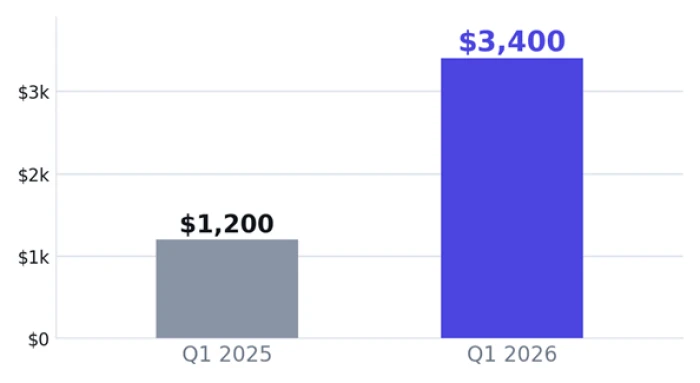
Mid-market AI tool spend per month. Source: BizIQ, 2026
From adoption to accountability. Source: Salesforce, Jasper, Factors, 2026
Team-level spend nearly tripled in a year, and AI now takes about 31.7 percent of the average marketing budget, per Gartner, up from 23.4 percent two years earlier. Yet only 41 percent of marketers can prove a return, and around 42 percent of companies dropped a generative content tool they had bought, almost always where it arrived without a workflow.
What moves a layer between the columns
The same capability grades as working or waste depending on four conditions. Fix these and most of the stack moves up.
- Data quality. Decides whether personalization and research come out sharp or come out as noise. Stale, siloed data produces irrelevance at scale.
- A human in the loop. Decides whether content builds trust or erodes it. Editing is what turns a raw draft into something worth publishing.
- Workflow integration. Decides whether a tool gets used or abandoned. Generation with no briefing, editing, or distribution around it is where the 42 percent abandonment rate comes from.
- Measurement. Decides whether you can tell the difference at all. With no AI-specific metric, the layers that pay back and the ones draining budget look identical.
The budget call
Sort the stack four ways: fund the base, back the proven, cap the unproven, and cut what trades trust for output.
| FUND | INVEST | CAP | CUT |
|---|---|---|---|
Shared assistant seats A governed model or two Secure, audited access | Personalization on clean data Bid and budget optimization Support deflection Predictive lead scoring | Autonomous agents Multimodal generation Net-new point tools | Generic content at volume Rules-based tools sold as AI Unused seats Anything with no KPI |
FINAL VERDICTKeep the stack. Cut the volume. Back the layers that turn data into value. AI is worth the budget, but only about half of it as spent today. Where it replaces an expensive human step and runs on clean data, it returns two to three times its cost. Where it manufactures content for its own sake or wears an AI label over old automation, it returns nothing and can cost you trust. The tool was never the edge. The discipline to tell working from waste is, and in 2026 that discipline is the whole game. 2 to 3x Return on the proven layers 41% Marketers who can prove a return 39% Buyers who trust heavy AI use less |